

Choosing Tiffany ceiling lights starts with more than the glass: think about how the fitting will sit within your room. A shade may catch your eye, but its proportions, position and pattern need to work with the space around it. Colourful stained glass can bring warmth and character, so consider how it will sit alongside your existing furnishings.
This guide compares pendant, flush and semi-flush forms, then looks at room colours, ceiling height and the practical details to check on a product page. The aim is to help you find a handcrafted fitting that feels at home and suits the room’s everyday needs.
Each shade in Tiffany Light House’s ceiling-light range is made from individually cut and arranged glass using the traditional copper-foil technique. That process gives each design its own pattern and presence. As you browse, weigh those details against your room’s needs. Free UK delivery, free 30-day returns and advice from the UK team offer reassurance as you choose.
Key Takeaways
- Compare pendant, flush and semi-flush Tiffany ceiling lights to find a fitting form that suits your ceiling.
- See how individually arranged glass gives each handcrafted shade its own pattern and character.
- Use your room’s colours, furnishings and desired visual emphasis to guide your choice.
- Check the product-page details that matter before settling on a design for your home.
Tiffany ceiling lights: bring colour and character to the heart of a room
Coloured glass draws the eye upwards. A patterned shade can add colour above a dining table or give the centre of a sitting room more presence. The fitting becomes part of the room’s character, adding a decorative detail without needing to dominate everything around it.
Tiffany ceiling lights are ceiling fittings with stained-glass shades, where coloured pieces form a visible pattern rather than a plain, uninterrupted surface. Each design has its own visual rhythm, from flowing motifs to orderly geometric forms. The shade’s outline and pattern remain part of the room’s view whether the light is on or off.
What makes a Tiffany ceiling light distinctive?
Look at how the colours meet, how the pattern moves across the shade and how the glass pieces create a handcrafted quality. Tiffany-style lighting makes an expressive statement, but it isn’t limited to period interiors. A patterned glass fitting can add contrast to a contemporary room or sit comfortably among traditional furnishings.
The style has a history rooted in decorative glasswork. For a concise overview of its origins and design, see the Tiffany lamp Wikipedia article. When choosing a fitting, start with its character: decide whether you want it to blend with the room or stand out as a feature.
Where does a ceiling fitting shape the room’s character?
A ceiling light has a natural place in the room’s composition. Its shape and pattern can be seen from different viewpoints, so consider what sits beneath it and what is visible around it. Above a dining table, for example, a fitting can draw attention to that area. In a hallway, its pattern may be one of the first details you notice on entering.
Before choosing a design, take stock of the colours in your furnishings, flooring and decorative details. You could echo a tone already in the room or introduce a contrasting colour that feels intentional. Aim for harmony rather than an exact match. If the room has several strong patterns, a simpler glass design may feel calmer. A quieter scheme can make space for a more intricate shade.
This guide focuses on style and the details that help you compare ceiling fittings. For size, use the dedicated size guide; for installation, seek suitable professional guidance. Start by considering the room’s existing character, then compare fitting forms and product-page details to narrow down your choice.
How handcrafted Tiffany ceiling-light shades take shape
A stained-glass shade is made up of more than a single sweep of colour. Its pattern consists of separate pieces, chosen and arranged as part of the overall design. At Tiffany Light House, shades are made from individually cut and arranged glass using the traditional copper-foil technique. The finished pattern makes the craft visible in the details.
Individually cut glass pieces, carefully arranged and brought together using the traditional copper-foil technique, are at the heart of handcrafted Tiffany ceiling lights. The design comes together piece by piece, rather than appearing as a plain, uninterrupted surface.
What does the copper-foil technique mean?
In this traditional method, copper foil is used to bring the separate pieces of glass together. It helps form the joins that make up the shade, while the individual pieces remain visible as part of its pattern. You don’t need to know the technical detail to appreciate the result: the method allows designs to be built from arranged sections of glass, with the joins contributing to the handcrafted look.
The phrase “copper-foil technique” describes the approach, not a promise that every shade has the same pattern. The arrangement of glass, colours and motifs all shape the finished appearance. These visible details make the craft worth considering when comparing designs for your home.
What can you notice in the glass and pattern?
Start with the overall motif. Does it feel orderly and geometric, or more flowing? Then look at how the colours sit beside one another and how the pattern carries across the shade. A design with clear shapes may feel composed and defined; a more intricate arrangement can draw attention to its finer details. These are impressions, not fixed rules, so let your own preference lead.
Product photographs give you a first view of the pattern and colour. Look at the whole shade, then take a closer look at its glass sections. Consider how the colours might sit alongside tones already in your room, such as those in a favourite cushion, rug or piece of wooden furniture. Screens and room lighting can affect how colours appear, so treat photographs as a guide to the design, not an exact preview of how it will look at home.
Looking closely makes browsing more purposeful. Rather than choosing by colour alone, notice how the motif, glass and overall composition work together. To compare these details across the Tiffany ceiling-light range, take time with each design. Differences in pattern can help you find a shade that feels at home in your surroundings.
Pendant, flush or semi-flush Tiffany ceiling lights: compare the forms
The fitting form affects how a shade sits in the room. A pendant hangs down from the ceiling, while flush and semi-flush fittings sit closer to it. This changes the fitting’s outline and visual presence, making form a useful starting point before you compare glass patterns.
How do pendant and closer-to-ceiling forms differ?
Pendants hang from the ceiling; flush and semi-flush fittings sit nearer to it, with semi-flush designs leaving a visible space between the fitting and ceiling. These general descriptions help you picture each form, but construction and measurements vary by product. Check the product-page specifications for the details of a particular fitting.
| Form | General ceiling relationship | Visual presence |
|---|---|---|
| Pendant | Hangs down from the ceiling | Creates a distinct suspended shape |
| Flush | Sits close against the ceiling | Has a more integrated profile |
| Semi-flush | Sits close to the ceiling, with a gap | Shows some separation from the ceiling |
Picture how each outline would sit among the room’s existing features. A hanging fitting makes its shape more prominent in the room’s composition, while a closer-to-ceiling form may feel more contained. Neither is automatically the better choice. Consider which feels in keeping with your furnishings and the character you want overhead.
You may also come across the term inverted in ceiling-light categories. It describes another fitting category shoppers might encounter. Check the individual product description for its form and specifications rather than assuming details from the label alone.
Which design language feels right for your home?
Once you’ve considered the fitting form, look at the design language. Tiffany-style glass can feel traditional or expressive, with patterns that are floral, geometric or influenced by a particular decorative style. Let the design itself guide you. These terms are useful descriptions, not names of specific collections.
Tiffany Light House’s range includes Art Deco Tiffany-style ceiling lights. Art Deco is one example of a defined design influence; if you’re drawn to it, the dedicated Art Deco style guide offers a closer look. For other motifs, consider the pattern and colours shown on each product page, then think about how they relate to the room.
Decide whether you want the fitting to sit quietly within the décor or become a noticeable focal point. A strong geometric pattern can make a deliberate accent, while colours that echo existing furnishings may help a design feel connected to the room. Compare the overall impression, then check the product-page details for the precise fitting form and specifications. This brings visual preference and practical information together.
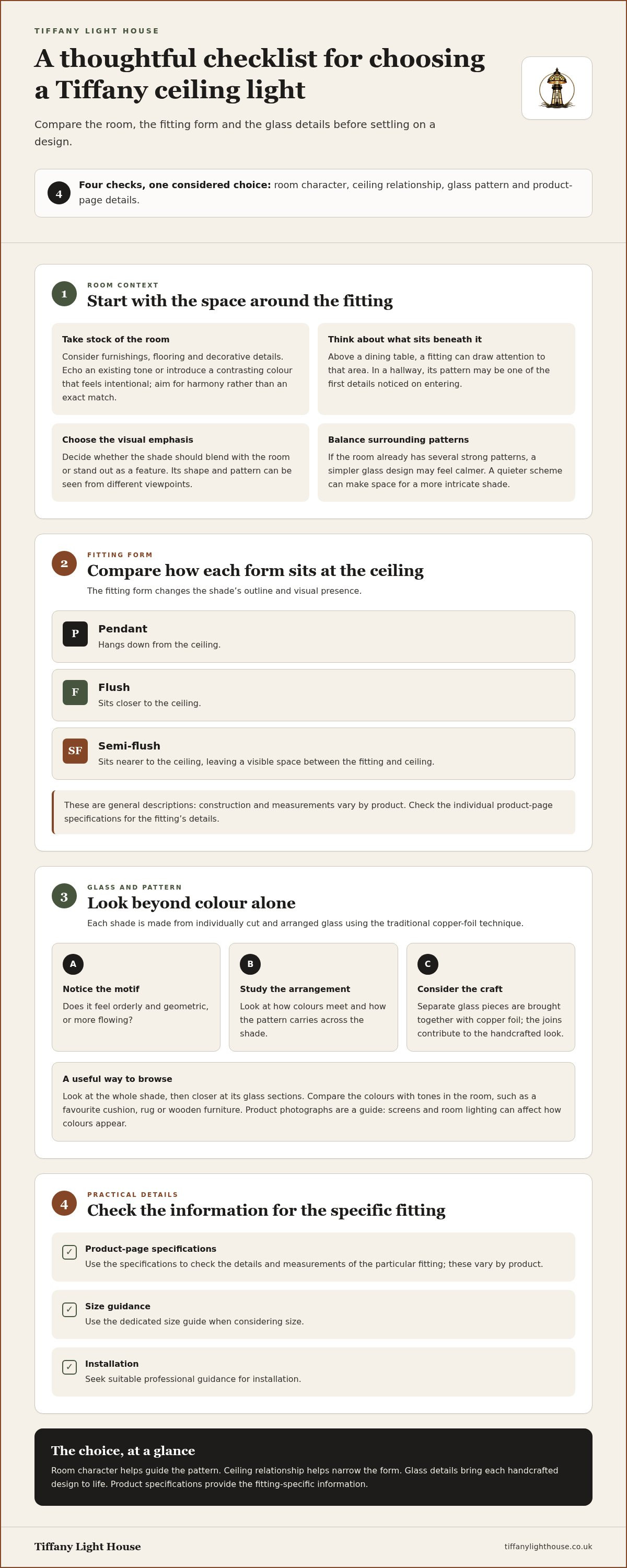
A thoughtful checklist for choosing Tiffany ceiling lights
A little structure can make choosing easier. Start with the fitting form, then compare the design with your room and the details listed for the individual light. This keeps practical suitability and personal taste in view at the same time.
- Choose the fitting form. Decide whether a pendant, flush or semi-flush style feels right for your ceiling and how you want the fitting to sit within the room.
- Look at your existing colours. Notice the tones in your walls, furnishings and flooring. A glass design could echo one of them or introduce a considered contrast.
- Consider the pattern and visual emphasis. Decide whether you want a quiet accent or a noticeable focal point, especially if the room already has strong patterns or features.
- Keep everyday lighting needs in mind. Consider how you use the room and what you need the lighting to do. The decorative qualities of stained glass are one part of the decision, not a substitute for checking practical specifications.
- Finish with the product-page details. Review the listed dimensions, fitting type, bulb information and electrical specifications. Use the dedicated Tiffany ceiling-light size guide for more focused size guidance, and don’t infer technical details from a photograph or category label.
With your priorities in mind, Explore Tiffany ceiling lights and compare the designs at your own pace.
What should you check on a ceiling-light product page?
Read the written specifications alongside the photographs. Check the listed dimensions and fitting type, then review the bulb and electrical information for that particular light. Product descriptions provide its specific details; appearance alone can’t tell you every technical requirement.
Photographs help you judge the motif, colours and overall character. Compare these with your room’s palette and the details you want to bring forward. If a specification matters to your decision, find it in the product information rather than assuming it from the fitting’s style or shape.
How can you balance colour, pattern and everyday use?
Take stock of the room before settling on a design. If patterned fabrics or bold furnishings already draw the eye, a quieter glass motif may feel more at ease. In a simpler scheme, a more decorative shade could provide a focal point. These are not rules; choose the balance that feels comfortable to you.
Separate the visual decision from the practical one. Colour and pattern help you choose a fitting that feels personal; bulb and electrical specifications help you assess its everyday suitability. Considering both makes it easier to choose confidently, without expecting the glass design alone to answer every lighting question.
Shop Tiffany ceiling lights with craftsmanship and reassurance in mind
You’ve considered the fitting form, the room’s colours and the practical details that matter to you. Now you can browse with a clearer idea of what to look for. Tiffany Light House’s ceiling-light range brings together stained-glass designs made from individually cut and arranged glass using the traditional copper-foil technique. The craft is part of each shade’s visible character, giving you more to appreciate than colour alone.
As you compare Tiffany ceiling lights, return to your shortlist criteria. Which fitting form feels right? Are you looking for a subtle note of colour or a more noticeable pattern overhead? Keeping those preferences in mind as you read product descriptions helps you compare designs at a comfortable pace instead of deciding at a glance.
What reassurance can make choosing online feel simpler?
Clear product information is useful when considering a fitting from home. It lets you review listed details and compare designs alongside photographs showing each shade’s pattern and appearance. Match the information to your checklist. If a particular specification matters to your decision, rely on the product details rather than guessing from a picture.
There’s reassurance beyond the product page, too. Tiffany Light House offers free UK delivery and free 30-day returns. Advice from the UK team is available if you’d like help thinking through your choice. A friendly perspective can be useful when weighing the details and deciding which design feels most at home.
How can you take the next step at your own pace?
Browse the range with your room in mind. Keep a note of the fitting form, the pattern that caught your eye and the product-page details you want to compare. Return to those points as you explore, and consider whether each shade’s colours and overall presence suit your furnishings.
You don’t need to settle on the first design that appeals. Look at the arrangement of glass, the character of the pattern and the listed specifications. If you’d value advice, the UK team can help you consider your options, bringing practical questions and personal preferences together.
Ready to explore? Browse Tiffany ceiling lights and take the next step towards a handcrafted fitting that feels right for your home.
Let the right light feel at home
Choosing a ceiling light gives a familiar room a chance for a detail that feels distinctly yours. As you browse, notice which patterns you keep returning to and picture how they might sit among the things you already love. The right choice doesn’t need to follow a decorating rule. It can simply feel at ease in your home.
There’s a quiet pleasure in knowing the shade is handcrafted from individually cut and arranged glass, brought together using the traditional copper-foil technique. Free UK delivery and free 30-day returns offer reassurance as you choose.
Take your time, trust your eye and find a design that brings the character you’re looking for. Browse Tiffany ceiling lights and discover a fitting that feels welcoming from the moment you look up.
Frequently Asked Questions
Do Tiffany ceiling lights look different when they are switched off?
Yes. The glass pattern remains visible, but its appearance can change with the surrounding light. With the fitting off, you’ll see the shade as a decorative object; daylight or nearby lamps may bring out different colour details. Compare product photographs with your room’s palette, remembering that screens and ambient light can affect how colours appear. The pattern can still add interest overhead during the day.
Can Tiffany ceiling lights be dimmed?
It depends on the specific fitting, bulb and dimmer combination. Check the product information for dimming compatibility, then make sure the bulb and dimmer are suitable for one another. Don’t assume a fitting is dimmable because of its appearance or because a dimmer switch is already installed. If the product details don’t make compatibility clear, seek advice before using a dimmer with that light.
Do Tiffany ceiling lights use standard bulbs?
Bulb requirements vary between fittings, so “standard” isn’t a safe assumption. Check the product page for the bulb type and any stated electrical specifications, including permitted bulb details. A bulb that looks as though it will fit may still be unsuitable. Before buying a replacement, compare its information with the fitting’s requirements. This helps you avoid choosing based only on the bulb’s shape or the appearance of the holder.
How should I clean a Tiffany ceiling light?
Switch the light off and let it cool before cleaning. Use a soft, dry cloth to gently dust accessible parts of the shade, without pressing hard on the glass or its joins. Avoid spraying cleaner directly onto the fitting or taking the shade apart. For care beyond light dusting, follow the instructions supplied with the product. If you can’t reach the fitting safely, don’t stretch or balance on unstable furniture to clean it.
Can Tiffany ceiling lights work in a contemporary home?
Yes. A stained-glass ceiling light can sit comfortably in a contemporary room, where its pattern offers a decorative contrast to simpler furnishings and clean lines. You might choose a shade whose colours pick up one detail in the room rather than matching every surface. Consider the overall balance: if the space already has several prominent patterns, a quieter design may feel more settled. Let your own taste guide the pairing.
How can I tell whether a Tiffany ceiling light is right for my ceiling?
Compare the fitting’s listed dimensions and mounting details with your ceiling and the available space around it. Check whether its form is pendant, flush or semi-flush, and review the product information for relevant fitting and electrical specifications. Don’t rely on photographs to judge measurements or assume two fittings attach in the same way. If you’re unsure about electrical suitability or installation, consult a qualified electrician before proceeding.