

The right stained glass wall light is more than a pretty shade: it should suit the room, complement nearby metal finishes and take a bulb that gives the light you want. Floral and dragonfly designs bring flowing colour, whilst geometric patterns create a more ordered look. LED suitability depends on the fitting and bulb.
It’s easy to focus on the glass first, but the fitting’s brightness and care needs matter too, especially in a room where you use it often. Thinking through these details can help the light feel at home and make its coloured glow a pleasure to live with. This guide covers floral, dragonfly, geometric and abstract styles, how to coordinate metalwork, bulb choices and simple glass care. You’ll have a clearer idea of which design and practical details suit your space.
Key Takeaways
- Compare floral, dragonfly, geometric and abstract patterns with the room’s existing shapes and colours to find a style that feels at home.
- Before choosing an LED bulb, match it to the fitting and consider whether both the bulb and dimmer support dimming.
- Keep coloured glass clear with gentle dusting and occasional careful cleaning, rather than abrasive products.
- Consider how the metalwork will sit alongside nearby fittings and furnishings; a coordinated finish can help the light feel part of the room.
Floral, dragonfly, geometric and abstract designs
Floral patterns bring familiar garden forms indoors. Look for rosebuds, curling stems or broad leaves to complement botanical prints and natural timber. Dragonfly Tiffany wall lights offer a more distinctive motif, with contrasting pieces of coloured glass that can create a focal point above a reading chair or beside a doorway. A strong central motif draws the eye; smaller repeated details create a quieter rhythm.
Geometric designs take a different approach. Repeated squares, diamonds and straight borders pair naturally with orderly interiors and angular furniture. Abstract patterns use colour and shape without depicting a recognisable flower or creature. Compare the shade with the wall behind it: a busy pattern stands out against a plain surface, while a simpler design can sit comfortably among patterned furnishings. Tiffany Light House shades are handcrafted from individually cut and arranged glass, using the traditional copper-foil technique. The arrangement of pieces gives each design its character.
For safe installation, have a qualified electrician fit a hard-wired light in line with the fitting’s instructions. Keep the power isolated during any work on the fitting.
Bathrooms and outdoor spaces need fittings specifically rated for their location. A stained-glass shade alone doesn’t establish that a wall light is suitable for moisture or weather. Choose a fitting whose stated rating covers the intended setting.
Before choosing, compare the motif, colour balance and scale against the wall. A leafy pattern, for example, can echo botanical wallpaper, while a dragonfly design adds a clear accent to a plain hallway. Check how the glass looks with the room’s colours in daylight and when lit. A dark border can define the pattern, while pale glass may make its colours feel softer. This comparison helps narrow your options without relying on the motif alone.
LED compatibility and dimmable bulbs
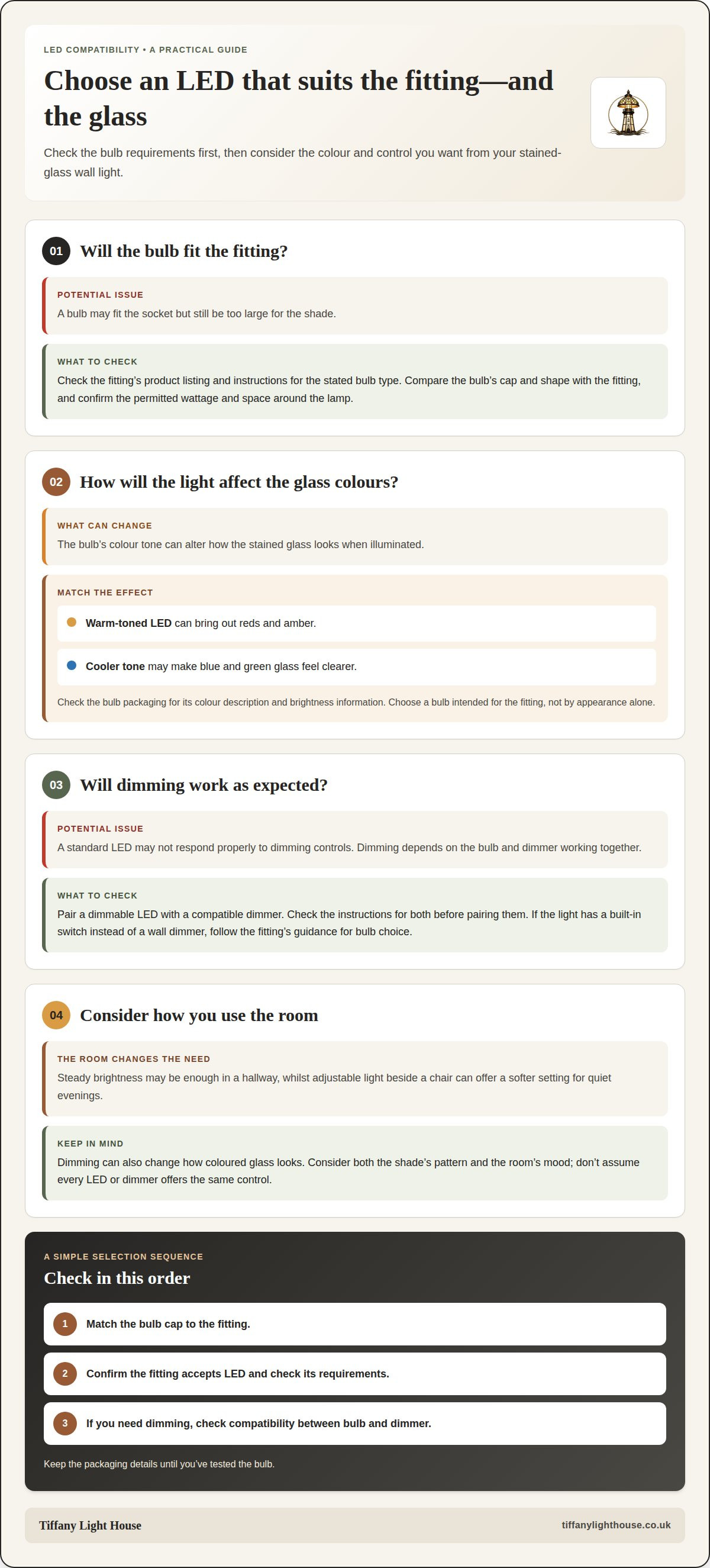
LED choice affects running light, colour and the atmosphere through stained glass. Start with the fitting’s stated bulb requirements, then consider whether you want dimming.
LED Bulb Compatibility
LED compatibility depends on the fitting, not just its shade. Check the product listing and instructions for the stated bulb type, then compare the bulb’s cap and shape with the fitting. Also check the permitted wattage and space around the lamp. A bulb that fits the socket may still be too large for the shade.
Consider how the glass colours may look when illuminated. A warm-toned LED can bring out reds and amber, while a cooler tone may make blue and green glass feel clearer. Check the bulb packaging for its colour description and brightness information. These details help you picture the effect before fitting it. Choose a bulb intended for the fitting rather than relying on appearance alone.
Dimmable Bulb Compatibility
Dimming depends on the bulb and dimmer working together. A dimmable LED needs a compatible dimmer; a standard LED may not respond properly to dimming controls. Check the instructions for both before pairing them. If the light uses a built-in switch rather than a wall dimmer, follow the fitting’s guidance for bulb choice.
Think about how you use the room, too. Steady brightness may be enough in a hallway, while adjustable light beside a chair can offer a softer setting for quiet evenings. Dimming can also change how coloured glass looks, so consider the shade’s pattern as well as the room’s mood. Don’t assume every LED or dimmer offers the same control.
A simple selection sequence keeps the details clear: match the cap, confirm the fitting accepts LED, then check dimming compatibility if needed. Keep the packaging details until you’ve tested the bulb. For a fitting with a coloured glass shade, the right bulb supports both practical illumination and the pattern’s gentle glow. Explore handcrafted stained-glass lighting for designs that bring colour into the room.
Cleaning and maintenance advice
Regular dusting keeps coloured glass clear and its pattern easy to see. Use a soft, dry cloth, moving gently across each section. Support the shade with your free hand if you can reach comfortably, to avoid putting pressure on a single glass panel. For a dragonfly motif, dust carefully around the small wing pieces and lead lines. A clean, soft brush can lift dust from narrow details without rough scrubbing.
Every few months, lightly clean the surface with a damp microfibre cloth. Wring it out first so it feels barely damp, not wet. Work in small areas, following the shape of the shade, then use a dry, soft cloth to remove any remaining moisture. This careful approach works for floral designs with many small glass sections and simpler geometric patterns alike.
- Use a fresh cloth for the glass, especially after dusting nearby furniture.
- Avoid abrasive pads and harsh cleaning products, which can scratch or affect delicate finishes.
- Don’t spray cleaner directly onto the shade; apply moisture to the cloth instead.
- Check the seams and edges as you clean, and stop if a piece appears loose.
Take extra care around copper-foil joins and the metalwork. Wipe the glass lightly, without leaving water along a seam. If dust gathers behind a curved edge, use a soft brush rather than forcing a cloth into the gap. For a wall fitting above a mantel, clean only the reachable surface without leaning on the shade or using it as a handhold.
Make dusting part of your regular room routine. During an occasional damp wipe, look for fingerprints, dust build-up and changes around the joins. Keep the cloth clean between sections so grit from one area doesn’t mark another. Gentle, regular care helps preserve the glass colours and the detail of each carefully arranged pattern.
Finishes and metalwork
The metalwork frames the glass and shapes the fitting’s character. A warm brass tone can echo timber or antique furniture, while a darker finish creates stronger contrast against pale walls. Polished metal draws more attention; a softer, aged appearance sits quietly beside traditional furnishings. Consider the room’s existing details, such as door handles, curtain poles and picture frames.
Start by looking at the other metals in the room. If a hallway has dark ironmongery, a similarly dark fitting can make the scheme feel deliberate. In a sitting room with warm-toned handles, brass-coloured metalwork may create a closer visual link. Exact matching isn’t essential. Repeating a finish in a nearby detail, such as a lamp base or frame, can help the wall light feel connected.
Consider the glass and frame together. A floral shade with many colours may already draw the eye, so understated metalwork can keep the petals in focus. A geometric shade has crisp lines, which a defined metal edge can reinforce. For an abstract pattern, compare the frame with both the glass and the wall. Strong contrast can make the outline prominent, while a closer colour match can soften it.
- View the finish beside existing handles or fittings.
- Compare it against the wall colour in daylight and evening light.
- Notice whether the metal edge complements the shade’s pattern.
- Choose a finish that suits the room’s overall mood, not just one accent.
Metalwork also needs gentle care. Dust it with a soft cloth, and avoid abrasive pads that could mark the surface. During cleaning, take care around the joins between glass and metal. A light touch helps preserve the finish and keeps attention on the coloured glass. For a considered starting point, explore handcrafted glass lighting designs and compare how their frames sit with your room’s details.
Tiffany Light House: Tiffany Ceiling Lights
Tiffany Light House offers stained-glass wall lights for rooms where colour and crafted detail matter. Each shade is handcrafted from individually cut and arranged glass using the traditional copper-foil technique. Compare a wall light’s pattern and metalwork with your furnishings. Tiffany ceiling lights add a related decorative touch overhead, while floor and table lamps let you echo coloured glass elsewhere in the room.
Explore the range when you’re ready to move from comparing styles to choosing a fitting for your home. For a closer look at the available designs, contact Tiffany Light House.
Choose the light that feels at home
Let the room guide your final choice. A wall fitting beside a favourite chair can create a gentle pool of light, while one in a hallway can add colour to a quieter corner. Notice how the glass looks against the wall during the day, then consider the atmosphere you’d like after dusk. The right stained glass wall light should feel connected to its surroundings, not simply beautiful on its own.
Before deciding, picture the fitting alongside the room’s furniture and everyday details. Think about the mood you want to return to each evening and which colours will make the space feel personal. There’s no need to rush. A considered detail can bring lasting warmth to a home.
If you’re ready to explore wall-light designs, contact Tiffany Light House about wall lights. Take the next step at your own pace, and find a fitting that feels naturally yours.
Frequently Asked Questions
What is a stained glass wall light?
A stained glass wall light is a wall-mounted fitting with a shade made from coloured glass arranged in a decorative pattern. The light source sits behind or within the shade, bringing out the glass’s colours. A small fitting can add a visual accent beside a doorway, while a broader shade can become a feature above a console table.
What styles and designs are available in the UK?
Common designs include flowers, dragonflies, geometric patterns and abstract arrangements. In a room with botanical prints, a leaf or rose motif can echo those details. A dragonfly pattern creates a clearer focal point, while repeated geometric shapes can complement orderly furniture. Compare the motif with nearby patterns so the shade adds interest without making the wall feel crowded.
What bulb type and wattage do these lights use?
The bulb fitting and wattage depend on the individual light, so follow its product instructions. One example listed in the UK uses a 40W E14 golf lamp; Tiffany Light House’s products are compatible with E27 bulbs, not included. These specifications aren’t interchangeable. Check the fitting’s label and choose a bulb with the stated cap type and suitable dimensions.
Are these lights dimmable?
Some fittings can be dimmed, but the bulb and control need to be compatible. Look for a dimmable marking on the bulb, then check the fitting and dimmer instructions. If you choose an LED, don’t assume every dimmable LED works with every control. Matching the components helps avoid uneven changes in brightness or a light that won’t dim as expected.
How do you clean and maintain these lights?
Handle the shade gently and avoid putting pressure on individual glass pieces. If the light is above a side table, move ornaments first so you can reach it without knocking the fitting. Use a clean cloth and avoid abrasive materials that might scratch glass or metal. If you notice a loose piece or damaged join, stop cleaning that area rather than pressing on it.
What should I compare when choosing a wall light?
Compare the shade’s dimensions with the available wall space and nearby furniture. A stained glass wall light beside a narrow doorway needs a different profile from one above a wide mantel. Consider how the pattern, glass colours and metalwork relate to the room’s other details. Viewing the fitting against the intended wall colour can help you judge its overall presence.


