

Original Tiffany Studios lamps are no longer made: production continued until 1928. Traditional Tiffany lamps made today are Tiffany-style interpretations, with coloured glass assembled by hand to create a similar warmth and character.
The appeal is easy to understand. A softly lit shade can bring colour and a sense of craft to a quiet corner, while a floral design feels quite different from geometric or Art Deco patterns. This guide explains how those stained-glass styles differ, whether authentic Tiffany Studios lamps are still being produced, and which bulb considerations matter for a table lamp.
A floral shade can add colour and character to a room, but its motif, scale and light all affect the overall look. From distinguishing an original from a modern Tiffany-style lamp to choosing a compatible bulb, these practical details can help you find a design that feels at home.
Key Takeaways
- Original Tiffany Studios lamps are no longer made; modern interpretations draw on the same tradition of coloured glass and careful assembly.
- Choose a clear bulb for the shade’s colours, then match its fitting to the lamp. A warm colour temperature helps create a gentle glow.
- Floral motifs bring a softer, nature-inspired feel, while geometric designs create a more structured look. Consider the room’s palette and mood when choosing.
- Compare table, floor, ceiling and wall lights to find the form that suits your space and the way you want light to fall.
What bulb goes in a Tiffany table lamp?
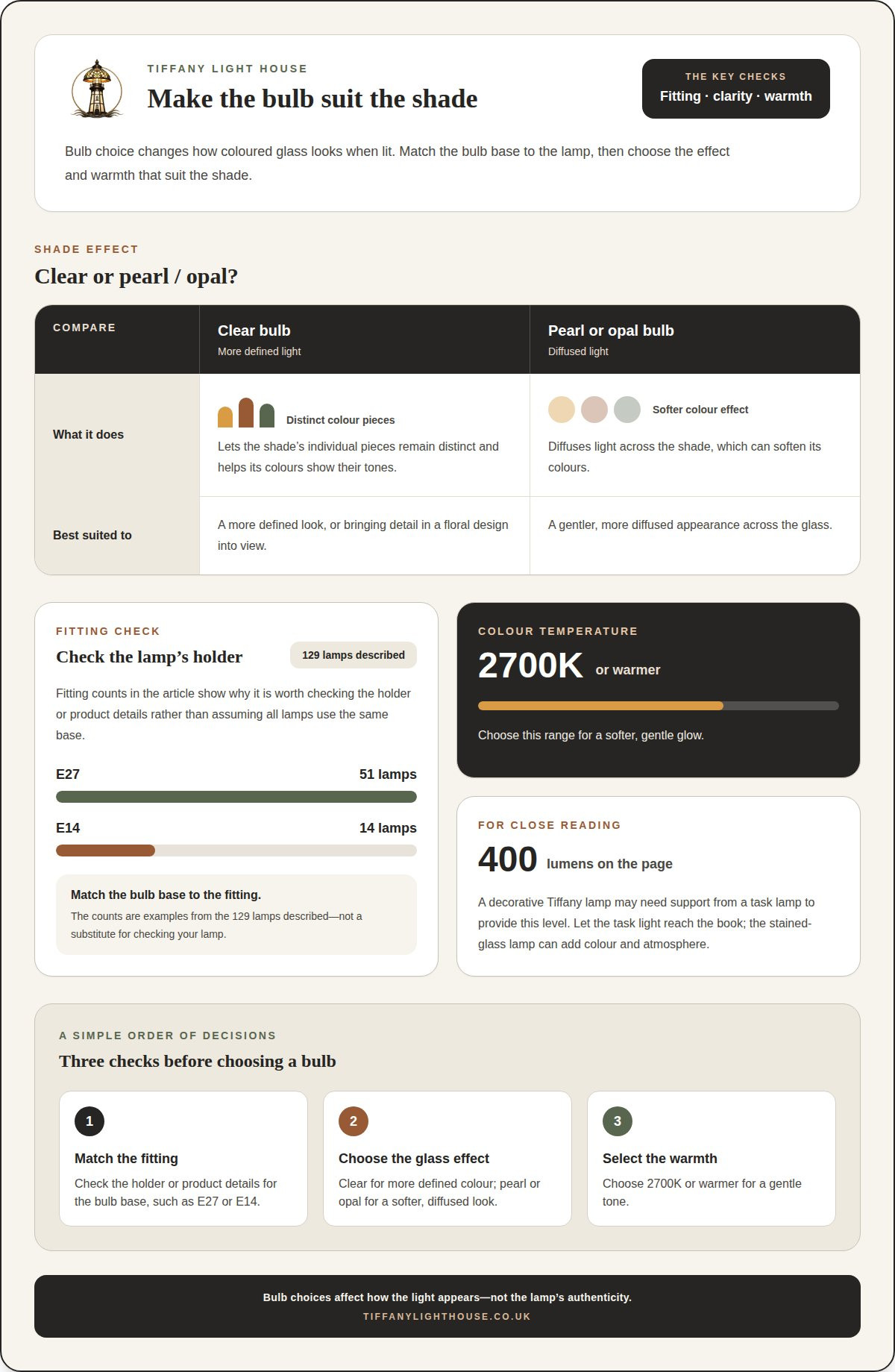
A clear bulb helps coloured glass show its tones; pearl or opal bulbs soften them. Choose a warm colour temperature of 2700K or warmer for a gentle glow. The fitting matters too. E27 is common, but E14 also appears in Tiffany table lamps.
Across 129 Tiffany table lamps described, E27 appeared in 51 lamps, while E14 appeared in 14. These figures show why checking the lamp’s actual fitting is a useful first step. Look at the holder or the lamp’s product details, then choose a bulb with the matching base. Don’t assume every Tiffany table lamp takes the same fitting.
For coloured glass, a clear bulb lets the shade’s individual pieces remain distinct. A pearl or opal bulb diffuses light across the shade, which can soften its colours. A clear bulb gives a more defined effect. The shade’s colours and the atmosphere you want both shape the choice.
- Check the fitting: match the bulb base to the holder, such as E27 or E14.
- Choose the glass: clear bulbs reveal more of the shade’s colour.
- Select the warmth: choose 2700K or warmer for a softer tone.
Before buying a bulb, check its fitting and colour temperature on the packaging. Then consider the shade’s pattern: clear light can bring out detail in a floral design, while a warmer tone creates a softer overall glow. These choices affect the light’s appearance, not the lamp’s authenticity.
An antique Tiffany lamp’s value depends on factors such as authenticity, condition, rarity, design and provenance. Original Tiffany Studios workmanship and a well-preserved shade can influence how collectors assess it.
For a table lamp, first check the fitting, then consider the bulb’s clarity and warmth. These choices help you decide how the glass will look when lit.
Are real Tiffany lamps still made?
Original Tiffany Studios lamps are no longer made. The studio’s lamp production continued until 1928. Lamps made today in a similar style are interpretations, not new originals from Tiffany Studios. That distinction matters when authenticity is central to your choice. For everyday lighting, the appeal may instead lie in coloured glass, careful assembly and the glow created when light passes through the shade.
A Tiffany table lamp shapes light through its glass shade. When lit, its colours and sections create a varied pattern across the shade and nearby surfaces. The effect depends on the glass, the lamp’s position and the room around it. On a side table, it can cast a gentle pool of light; against a plain wall, its colours can add to the room’s evening atmosphere.
For reading, consider the page itself. A reading area should receive at least 400 lumens on the page. A decorative table lamp may need support from a task lamp to provide that level. Position a focused light so it reaches your book without relying on the stained-glass shade alone. The Tiffany lamp can then add colour and atmosphere, whilst the task light serves close reading.
Traditional Tiffany lamps are not automatically safe or unsafe because they connect to modern UK electrical fittings. Safety depends on the condition and compatibility of the wiring, plug and lampholder. The glass shade does not determine the state of those electrical parts. Keep the distinction clear: visual authenticity describes a lamp’s design and origin, not the safety of its electrical components.
Ceiling lights spread illumination from above, while wall lights can add a softer glow at eye level. A Tiffany ceiling light can bring coloured glass into a dining space; a wall light can frame a hallway or sitting area. Consider where the light needs to fall, then choose a fitting that suits that purpose and the room’s existing lighting.
For a room that calls for stained-glass light overhead, explore Tiffany ceiling lights as one way to bring colour into the wider lighting scheme.
Tiffany-style lamp designs and stained-glass shades
Tiffany Studios produced lamp designs from 1893 to the 1920s. Those original patterns still inspire stained-glass lamps today. A tiffany lamp can feel floral and flowing, or crisp and architectural. Its pattern, glass colours and shade shape all influence the room’s character. Traditional Tiffany lamps often bring together many small pieces, creating a design that rewards a closer look.
Art Nouveau designs take inspiration from natural forms. Look for flowers, leaves, curved lines and dragonflies, which create a sense of movement across the shade. A floral pattern can feel delicate, while sweeping stems give the design a more dramatic rhythm. This style suits rooms where organic shapes and softened colours already feature.
Art Deco designs take another direction. Geometric forms, strong outlines and balanced layouts create a more structured appearance. Traditional patterns may also favour repeating shapes or symmetrical arrangements. Compare the shade’s overall outline with its details: a regular pattern can feel composed, while a varied floral design feels more fluid. The Art Nouveau revival helped renew interest in Tiffany lamps between the 1950s and 1980s.
Construction affects how a shade’s design reads. Tiffany lampshades use copper foil to join glass pieces, rather than the lead came traditionally used for stained-glass windows. The narrow joins allow for intricate shapes and detailed motifs. In handcrafted shades, each piece of glass is cut and arranged to build the pattern, bringing small curves and colour changes together.
To care for a traditional Tiffany lamp, dry-dust the shade about twice a year, taking care around its glass pieces. Avoid abrasive cleaners and products containing solvents or chemicals, as these can damage the surface or joins.
When choosing a style, start with the room’s lines and colour palette. A dragonfly or flower motif can echo natural forms in soft furnishings, while an Art Deco pattern can complement straighter furniture and repeated shapes. Consider the shade’s scale too, so its stained-glass detail sits comfortably in the space.
Floral Tiffany table lamps
Floral shades bring a garden-inspired quality to stained glass. Look for petals, leaves, curling stems or a single prominent bloom. Repeated flowers create a lively pattern, while a central blossom gives the design a clear focus. Colour matters too: reds and greens can feel vivid together, while softer pinks and greens make a gentler impression.
Start with the room, not just the flower pattern. In a room with patterned curtains, a simpler floral shade can avoid visual competition. Against a plain wall, a more detailed design can become a focal point. Consider the lamp’s position too: beside a favourite chair, it adds colour close at hand; on a hallway table, it can create a softer welcome.
Scale helps a shade sit comfortably in its setting. Compare its width with the table surface and nearby objects, such as a book or vase. A broad floral pattern can dominate a small table, while a compact shade may feel lost on a wide console. Check the lamp from where you usually view it, and consider whether its outline and flower arrangement feel balanced from that angle.
Consider the colours already in the room. Echoing a shade from a cushion or rug creates a subtle connection, while a contrasting flower colour makes the lamp stand out. A red bloom, for example, can draw attention in a room with green accents. Let the glass provide the colour, then keep nearby accessories simple.
Before choosing, decide what role the lamp should play: a floral accent, a source of gentle evening light, or both. A clear bulb can help reveal the coloured glass, while a warm tone supports a relaxed atmosphere. Choose a shade whose motif, colours and scale suit its intended place.
Explore floral Tiffany table lamps to find a glass design that suits your room’s palette and mood.
Tiffany Light House: Tiffany Ceiling Lights
Tiffany Light House offers Tiffany ceiling lights for rooms that need stained-glass character overhead. Each shade is handcrafted from individually cut and arranged glass using the traditional copper-foil technique. The result adds colour and crafted detail to a room’s wider lighting scheme.
Choose a ceiling light when you want the fitting to shape the room’s atmosphere, rather than sit on a table or beside a chair. Tiffany Light House also offers Tiffany table lamps, floor lamps and wall lights, giving you different ways to bring stained-glass lighting into your home.
Its handcrafted shades offer a considered alternative to plain glass, with each piece arranged within the design. Free UK delivery and free 30-day returns are available.
For a stained-glass light that suits your home, contact Tiffany Light House.
Choose a stained-glass detail that feels at home
Let the room guide your choice. Think about where you pause, read or gather, and what kind of light would make that corner feel welcoming. A table lamp brings colour close at hand; a ceiling or floor light can shape the room more broadly. Consider the furniture, patterns and colours already there, then choose a shade that complements them rather than competing for attention.
Traditional Tiffany lamps can bring crafted colour into everyday surroundings. The right design need not match every detail in your home: it can echo a colour, soften a strong line or become a quiet focal point. Start with the place you want to change, then picture how the glass and light will look there. Choosing traditional Tiffany lamps is as much about the atmosphere you want as the room’s decorative style.
Tiffany Light House offers Tiffany Ceiling Lights, Tiffany Floor Lamps and Tiffany Table Lamps. If you’re ready to explore stained-glass lighting for your home, contact Tiffany Light House. Take your time choosing a design that feels like yours.
Frequently Asked Questions
What is the difference between a good Tiffany style lamp and a cheap one?
A well-made Tiffany-style lamp has a shade whose glass pieces form a clear, balanced design. Look closely at the joins, the consistency of the pattern and how securely the shade sits on its frame. For example, a floral motif should look deliberate rather than awkwardly interrupted. Compare the lamp in daylight and when lit, as both views reveal different details.
What are traditional Tiffany lamps?
Traditional Tiffany lamps are stained-glass lights inspired by designs associated with Tiffany Studios and the decorative arts of the period. The phrase can refer to original historic lamps or modern lamps made in a similar style. Distinguish an authentic Tiffany Studios lamp from a contemporary Tiffany-style piece: both can bring coloured glass into a home, but their origins and status differ.
How are traditional Tiffany lamps made?
In the traditional process, individual pieces of glass are cut and arranged to create the shade’s pattern. Copper foil joins the pieces, allowing for detailed designs with curved outlines. Each section contributes to the finished image. A dragonfly shade, for example, relies on carefully placed pieces to define its wings and body.
What materials and glass techniques are used in authentic Tiffany lamps?
Authentic Tiffany lamps use coloured glass assembled with copper foil, rather than the lead came associated with traditional stained-glass windows. Tiffany Glass Furnaces also produced blown Favrile glass, valued for its varied surface and colour effects. The type and arrangement of glass shape the shade’s appearance. A single lamp may combine different tones and textures to create depth.
What are the most common traditional Tiffany lamp styles and designs?
Recognisable designs include floral patterns, dragonflies, geometric arrangements and Art Nouveau curves. Art Deco interpretations favour more structured shapes and symmetry. Consider the room’s existing lines when choosing: a dragonfly motif can soften a simple side table, while geometric glass can complement angular furniture. The shade’s silhouette matters as much as its motif, especially in a compact space.
How can you tell an authentic Tiffany Studios lamp from a reproduction?
Appearance alone cannot prove that a lamp came from Tiffany Studios. Consider its documented history, construction, materials and condition together. Provenance means an object’s recorded ownership or history and can help support an attribution. Compare the shade’s workmanship with its claimed period and design. A Tiffany-style reproduction may echo the look, but resemblance does not make it an original.


