

Could the most colourful lamp in the room still feel at home? Tiffany floor lamps bring a gentle glow and vivid stained glass, but choosing one involves more than finding a pattern you like. The shade’s colours, motif and proportions all affect how it looks in your space, while its position influences the light it provides.
Start with the room, the kind of light you need and the details you enjoy. At Tiffany Light House, each shade is handmade from individually cut and arranged glass, joined using the traditional copper-foil technique. This gives every design its own character. This guide explains how to compare colours, motifs and scale, choose a position, and think about the lamp’s role in your lighting. When you’re ready to browse, free UK delivery and free 30-day returns offer added reassurance, and the UK team can provide advice.
Key Takeaways
- Compare the glass colours and motifs with the tones and patterns already in your room, so the lamp feels considered rather than out of place.
- Assess Tiffany floor lamps by palette, pattern and visual scale. Then decide whether you want a light for a particular activity or to add atmosphere.
- Choose a position that suits how you use the space, keeps walkways clear and lets you enjoy the shade from your usual seats.
- Each shade is handmade using the traditional copper-foil technique, with individually cut and arranged glass that gives the design its character.
- Check the individual lamp’s details as well as its appearance. Tiffany Light House offers free UK delivery, free 30-day returns and advice from its UK team.
Why choose a Tiffany floor lamp for your room?
A pool of light can make a familiar room feel different. Coloured glass adds a decorative detail that catches the eye by day and gives the lamp presence after dusk. A Tiffany floor lamp is both a source of local light and a visible design feature, so consider how it will work in the room as well as how it looks.
Unlike ceiling lighting, which usually serves a wider area from above, a floor lamp brings light closer to one part of the room. It can help define a reading chair or sitting area, while leaving the rest of the space in a calmer balance. It won’t necessarily replace general lighting: the lamp’s decorative impact and the amount of light you need are separate considerations.
The style has a rich history. The Tiffany lamp Wikipedia article explores the designs, production and people associated with it, including Louis Comfort Tiffany and designer Clara Driscoll. That context helps explain why stained glass is more than a splash of colour. It brings pattern and craftsmanship into everyday surroundings.
What does a Tiffany floor lamp bring to a room?
Think of the shade as part of your room’s overall composition. Its glass can introduce colour beside quieter furnishings or echo tones in a rug, cushion or artwork. The motif shapes the mood too, from nature-inspired to more ordered and geometric.
Beside a chair or sofa, a lamp can make a sitting area feel distinct and inviting. Start by considering what you’ll do there: a corner for unwinding has different lighting needs from a spot where you read. The shade may become a focal point, but its appearance alone won’t tell you whether the light suits the whole room.
Which rooms can suit a Tiffany floor lamp?
In a living room, try placing a lamp near a favourite seat to give that part of the space its own atmosphere. In a study, it could add character beside a reading chair; in a quieter corner, it can help the area feel more purposeful. These are starting points, not fixed rules.
Let nearby furniture help the lamp feel at home. A chair, sofa or table can give it a natural place rather than leaving it isolated. Check whether you can see the shade from the doorway and from the places where you regularly sit. A design that feels charming in one position may dominate another.
Room size and interior style don’t dictate a single right choice. Consider available floor space, how people move through the room and the mood you want to create. A little planning helps the lamp add colour without crowding the space.
How glass colour, pattern and craftsmanship shape Tiffany floor lamps
A stained-glass shade has presence even when the lamp is switched off. Light passing through the glass brings out its colours, while the arrangement of each piece creates a pattern that remains visible in daylight. Together, these details influence whether a lamp feels lively, gentle or richly decorative.
At Tiffany Light House, each shade is made from individually cut and arranged glass using the traditional copper-foil technique. Each piece is wrapped along its edges in copper foil, then joined to its neighbours to form the shade. This lets the pieces follow a considered pattern, with the joins forming part of the finished design.
Each individually arranged piece of glass contributes to the shade’s pattern, giving the finished design its own rhythm and detail.
How is a handmade Tiffany-style shade made?
Individual pieces of glass are cut and arranged to create the design. Copper foil is wrapped around each piece, and the pieces are joined together to form the shade. In the finished lamp, the colours and shapes work as a whole, while the boundaries between the glass remain part of its distinctive appearance.
How do colour and motif change the look?
Colour can shift the mood of a shade. Brighter glass may feel vivid and draw the eye, especially when illuminated. Softer tones can give the design a gentler presence, while darker colours may appear more restrained by day and create a deeper impression when lit. The effect depends on the shade and the light around it, so consider how it looks both switched on and off.
The motif adds another layer of character. Floral or leafy patterns suggest a botanical feel; a Dragonfly motif brings a nature-inspired detail, while repeated shapes can create a more graphic, ordered look. Traditional motifs often feel decorative and familiar, but the colours and proportions influence that impression too. Look at the whole pattern, not just its subject.
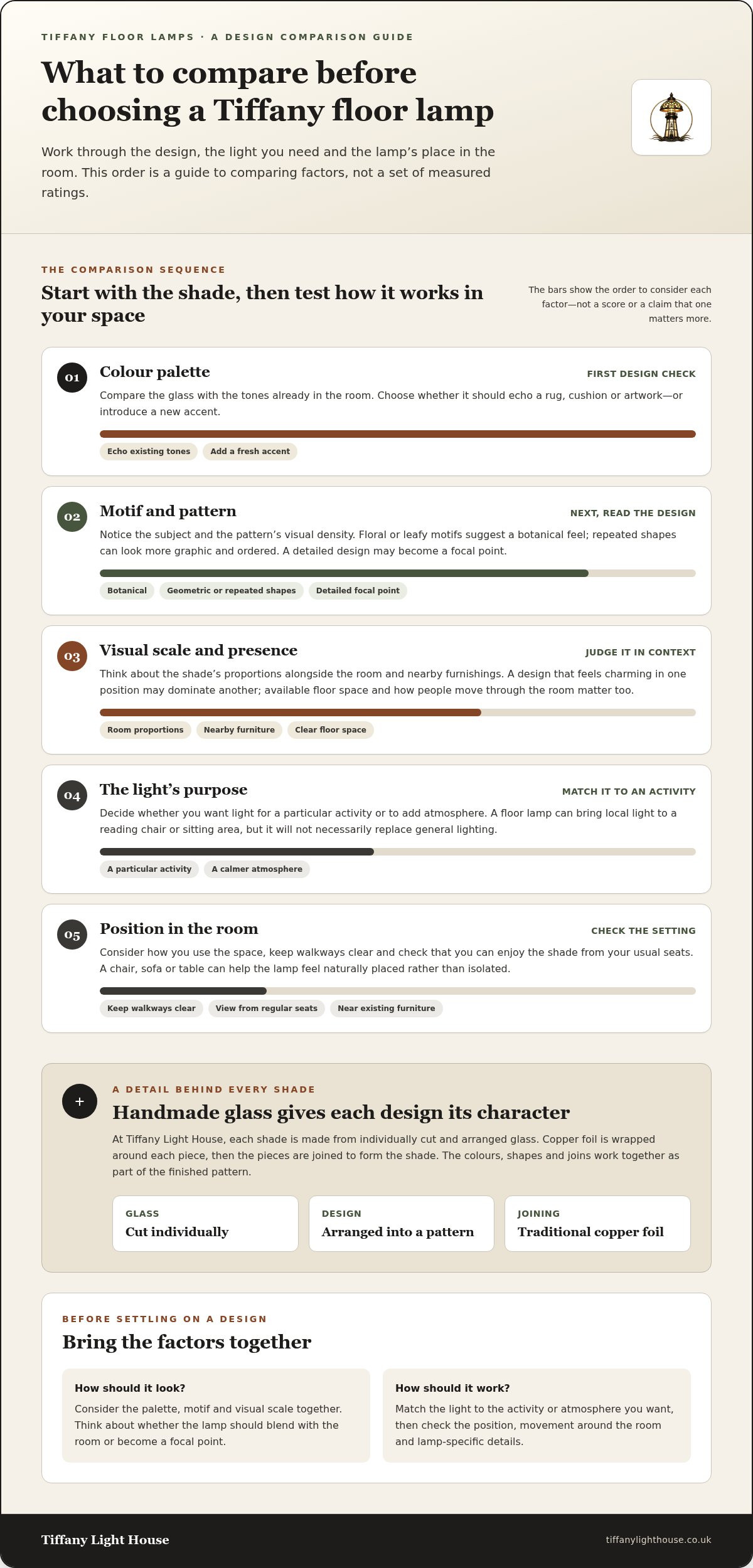
When comparing Tiffany floor lamps, start with the colours already in your room. Decide whether you want the shade to echo those tones or introduce a new accent. Then consider the pattern’s visual density. A detailed design may become a focal point, while a quieter palette can sit more gently among other furnishings. The right choice depends on the atmosphere you want and how much attention you’d like the lamp to draw.
For a closer look at glass colours and motifs, explore the handmade Tiffany floor lamps at Tiffany Light House. Each shade’s individually cut and arranged glass gives it its own pattern and character.
Compare Tiffany floor lamp designs by light, scale and style
A useful comparison starts with two questions: what should the lamp contribute to the room, and how much attention should its shade draw? Colour and motif shape its decorative effect; its position and product details help you judge whether it suits the way you’ll use the space. Consider these separately, then bring them together.
Which design details should you compare?
Compare the overall palette, the balance of colours and how much of the shade is filled with pattern. A busy motif may make a natural focal point, while a design with more visual breathing space may sit quietly among patterned furnishings. Consider the colours already in your room, but don’t feel you have to match them exactly. A complementary accent can work just as well.
| Design cue | What to look for | Possible visual effect | Setting to consider |
|---|---|---|---|
| Brighter palette | Clear, lively colour contrasts | Draws the eye and adds a vivid note | A room that can welcome a strong accent |
| Softer palette | Gentler colour balance | Feels more subdued amongst other details | A calm sitting area or reading corner |
| Nature-inspired motif | Floral forms, leaves or a Dragonfly | Suggests an ornamental, traditional character | A room with natural textures or classic details |
| Geometric motif | Repeating shapes and defined lines | Creates a more ordered, graphic impression | A space where structured patterns feel at home |
Use product images to compare visible details, but don’t assume a photograph tells you everything about a lamp. Consider the shade alongside your furniture and notice whether its pattern complements, contrasts with or competes against nearby fabrics and objects.
How should you think about light and scale?
Decide whether you want a lamp for reading, a softer atmosphere or a decorative focal point. A visually striking design may not provide all the general lighting a room needs. If you need broader illumination, consider the floor lamp as one part of the room’s lighting rather than the answer to every task.
Scale depends on what’s around the lamp. A shade that feels substantial beside a small chair may appear less prominent near a larger sofa, while a wide base can take up more floor space than its height suggests. Compare the lamp’s proportions with nearby furniture and leave clear routes around it. In an open area, it may stand out; among closely grouped furnishings, it may feel more integrated.
Before choosing, check the individual product details for dimensions and lighting specifications, then picture the lamp in its intended position. Browse Tiffany floor lamp designs with these points in mind to compare the options.
Where to place a Tiffany floor lamp to suit your home
Start with the moment you want the lamp to serve. For reading, place it close to your seat; if you want to give a corner more presence, choose a spot where the shade can be seen from elsewhere in the room. Once you know its purpose, find a position that feels natural and keeps everyday routes clear.
- Name the activity. Decide whether you’ll read, unwind or enjoy the lamp as part of the room’s atmosphere.
- Choose a nearby anchor. Look beside a chair or sofa for local light, or consider an open corner that feels bare.
- Check the route. Make sure the lamp won’t interrupt the path between a doorway, seating and frequently used areas.
- View it from the room. Consider how the shade looks from your main seat and from the places where you enter or pass through.
Place the lamp where its light serves an activity and its shade can be enjoyed without getting in the way.
How do you choose a position for the lamp?
For a reading or sitting area, start beside the furniture you already use. In a corner, consider whether the lamp will give the space a sense of purpose. Then look at the room from your main seat. Can you see the shade clearly? Does it feel balanced beside nearby furniture? A small adjustment can change how connected the lamp feels to the rest of the room.
How can the lamp work with existing décor?
Look for a colour in the glass that already appears in the room, perhaps in a cushion, rug or artwork. That shared note can help the shade feel connected without requiring an exact match. If the glass has a detailed pattern, simpler surfaces nearby can give it room to stand out. In a room with quieter furnishings, the lamp can provide a more expressive accent.
Materials matter too. Wood, upholstered furniture and metal details each create a different setting for coloured glass. Think about nearby finishes and whether you want the lamp to blend in or provide contrast. A botanical motif might sit comfortably alongside leafy prints, while a graphic pattern could complement more structured shapes. Let the room’s existing character guide you.
Picture the shade in its intended spot rather than judging it in isolation. Check the view from where you’ll sit, leave space to move around it and notice which colours it might echo. Explore Tiffany floor lamps with your chosen position and room palette in mind.
Shop Tiffany floor lamps with confidence at Tiffany Light House
You’ve considered where the lamp will sit, the kind of light you want and which glass design feels right for your room. Bring those choices together with the practical details of an individual lamp. A shade may catch your eye, but dimensions and lighting information help you judge how it will fit your space and intended use.
What should you check on an individual lamp listing?
Read each listing carefully. Floor lamps can differ, so don’t assume that dimensions, materials or lighting specifications are the same across the range. Compare the listed information with the space you have in mind. Measurements help you picture how the lamp relates to a chair or side table, while the lighting details help you assess whether it suits your plans.
- Room: Picture the lamp in its intended position, with enough space around it to move comfortably.
- Use: Decide whether you want a reading companion, a gentle glow nearby or a decorative feature.
- Design: Consider the shade’s colour and pattern alongside your furnishings and the room’s overall atmosphere.
- Details: Review the dimensions, materials and lighting information provided for that particular lamp.
What makes shopping with Tiffany Light House reassuring?
Each Tiffany Light House shade is handmade from individually cut and arranged glass using the traditional copper-foil technique. This process gives the pattern its form and reflects the care behind the finished shade. Keep that craftsmanship in mind as you weigh a lamp’s character against its practical fit at home.
Tiffany Light House offers free delivery across the UK and free 30-day returns. The UK team can also offer advice as you compare designs and narrow down your choice.
Before browsing, note the lamp’s intended position and what you need it to do. Compare its design with the colours and materials already in your room, then explore the Tiffany floor-lamp range. If you’d like guidance as you choose, the UK team is available to offer advice.
Let the right light find its place
Picture an ordinary evening in the room you have in mind. Where do you settle with a book, pause for a quiet moment or welcome a little colour after daylight fades? That everyday scene can help you compare Tiffany floor lamps. Look for a design that feels connected to your home, not simply one that catches your eye on its own.
At Tiffany Light House, each handmade shade is formed from individually cut and arranged glass using the traditional copper-foil technique. Free UK delivery and free 30-day returns offer practical reassurance as you make your choice. Keep your preferred position and purpose in mind as you browse.
Explore Tiffany floor lamps at Tiffany Light House and find a handmade favourite for your home. Choose a shade that suits your room and brings a welcome glow and a touch of your own style.
Frequently Asked Questions
Are Tiffany floor lamp shades made from real glass?
Yes. Tiffany Light House shades are made from glass, with each piece cut and arranged by hand. This gives the shade its coloured pattern and distinctive appearance. When comparing lamps, look closely at the product details and images to see how the colours work together. The finished shade can also be appreciated as a decorative feature when the lamp is switched off.
Can you use LED bulbs in a Tiffany floor lamp?
It depends on the individual lamp’s listed lighting specifications. Before choosing a bulb, check the product details for the permitted bulb type and any relevant limits. Don’t assume every Tiffany floor lamp has the same requirements. The UK team can offer advice based on the details for the particular lamp you’re considering.
Is a Tiffany floor lamp suitable for a small room?
It can be, provided there’s a practical place for it. In a compact room, consider a corner beside a chair or an underused area rather than a spot that narrows a walkway. Compare the lamp’s listed dimensions with nearby furniture and consider whether its shade will feel balanced from your usual seat. A small room doesn’t rule out a decorative lamp; placement matters.
Do Tiffany floor lamps provide enough light for reading?
That depends on the individual lamp and how you read. Check its lighting details, then consider your chair’s position and whether the light reaches the page comfortably. For longer reading sessions, assess the lamp alongside any other lighting you already use. A Tiffany floor lamp can add atmosphere to a reading corner even if it isn’t the only light source.
How do you choose a Tiffany floor lamp colour for your décor?
Start with the colours you enjoy living with, then decide whether you want the glass to echo a shade already in the room or introduce a contrasting accent. A lamp might pick up a colour in a cushion or bring a brighter note to neutral furnishings. View the design alongside your existing patterns and finishes, and consider how it looks in daylight as well as when illuminated.
Are Tiffany floor lamps difficult to assemble?
Check the product information for assembly guidance before choosing, and set aside a clear space to work if assembly is required. As you plan where the lamp will go, consider its dimensions and intended position. The UK team can also offer advice as you choose a design.
Can a Tiffany floor lamp be the main light in a room?
A floor lamp may contribute to a room’s overall lighting, but whether it can serve as the main source depends on the space and the light required. A lamp near a seat may illuminate that part of the room without reaching every corner. Consider the room’s layout and how you use it after dark, then review the individual lamp’s lighting details before relying on it alone.

