

A tidy-looking seam doesn’t always start with a roll of tape. For copper foil stained glass lamps, the practical difference is the format: copper foil tape is a narrow strip wrapped around glass edges, while copper-backed foil sheets provide a flat surface that can be cut to shape. Both provide copper foil, but suit different ways of preparing the pieces.
It’s natural to focus on the glass first. Colour and pattern shape the glow, while foil helps join each piece into a finished design. Choosing between tape and sheets may seem like a small detail, but it affects how you prepare the edges and approach the work.
This guide explains how the two formats differ, what to consider when choosing foil for a lamp project, and how careful preparation supports a tidy finish. You’ll also see how copper foil is used to make Tiffany-style stained-glass shades, from arranging the glass to completing the seams. Understanding the steps can make the craft feel more manageable and leave you free to enjoy the design taking shape.
Key Takeaways
- Understand how copper foil tape and copper-backed sheets differ, so you can choose the format that suits your lamp project.
- See which design and making factors shape a lamp’s cost, without relying on a single price as a guide.
- Learn the visible clues that help distinguish copper-foil construction from lead came.
- Use gentle cleaning and care habits to protect the glass and keep the shade looking its best.
How are copper foil stained glass lamps made?
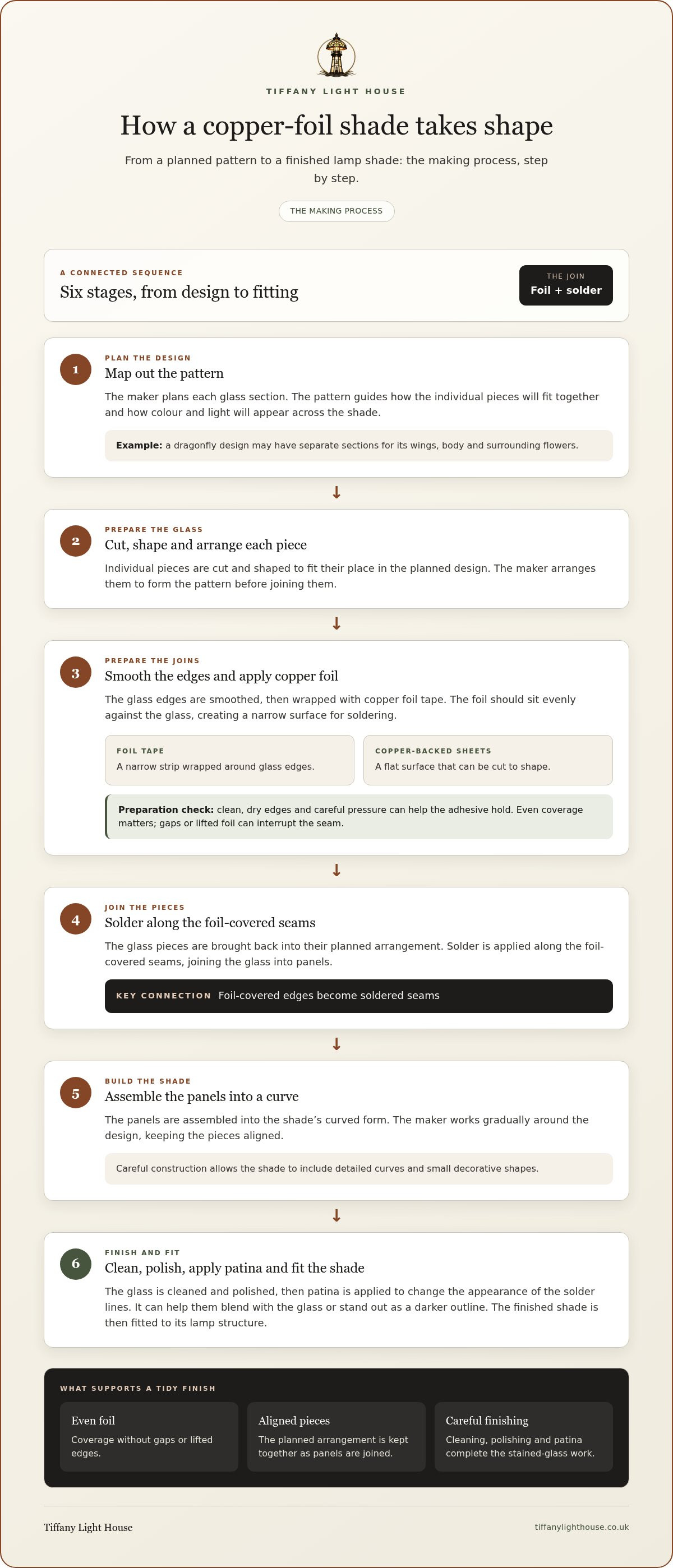
A Tiffany-style shade starts with a pattern. The maker plans each glass section, then cuts and arranges individual pieces to form the design. A dragonfly motif, for example, might have separate sections for its wings, body and surrounding flowers. In copper foil stained glass lamps, this layout guides how colour and light come together across the shade.
Each glass piece is shaped to fit its place, then its edges are smoothed and wrapped with copper foil tape. The foil creates a narrow surface along the joins, ready for soldering. It should lie evenly against the glass. If the foil doesn’t stick, clean, dry edges and careful pressure can help the adhesive hold.
Once wrapped, the pieces are brought together in their planned arrangement. Solder is applied along the foil-covered seams, joining the glass into panels. The panels are then assembled into the shade’s curved form. The maker works gradually around the design, keeping the pieces aligned. This careful construction allows copper foil stained glass lamps to feature detailed curves and small decorative shapes.
Finishing brings the surface into focus. Cleaning and polishing the glass, then applying patina, complete the stained-glass work. Patina changes the appearance of the solder lines, helping them blend with the glass or stand out as a darker outline. The finished shade can then be fitted to its lamp structure.
For a project, foil tape and copper-backed foil sheets offer different ways to prepare the joins. Tape comes as a narrow strip for wrapping glass edges; sheets can be cut into shapes to suit the work. The better fit depends on the pieces and the maker’s preference. Either way, even coverage matters: gaps or lifted foil can interrupt the soldered seam, which contributes to both the shade’s construction and its finished pattern.
How much do copper foil stained glass lamps cost in the UK?
There isn’t one fixed UK price for a copper-foil lamp. The price depends on the shade’s size, the intricacy of its glass design and how it was made. A simple pattern with broad sections involves different work from a detailed shade filled with small, carefully arranged pieces.
The choice of glass also affects value. Look at the colours, textures and cuts used in the shade. A design with contrasting glass pieces and fine detail takes more planning and assembly than a simpler pattern. For a pre-owned piece, check its overall condition, including the shade for cracks, loose sections, uneven joins or signs of previous repair.
Compare like with like before deciding whether a price seems fair. A table lamp and a floor lamp differ in scale and purpose, so their complete prices may not be directly comparable. Check whether the purchase includes only the shade or the full lamp, including its base and fittings. Note delivery charges, return terms and descriptions of the materials or maker too. These details help explain what the price covers.
For a handcrafted piece, assess the finish as well as the design. Evenly arranged glass, consistent seams and a balanced pattern can indicate careful workmanship. When buying second-hand, look for details such as the lamp’s age, maker or construction method. Keep this information with the listing so you can compare options on the same basis.
For a new lamp, start with the room and the role it needs to fill. A smaller table lamp may suit a reading corner, while a floor lamp can make a stronger visual presence. Browse Tiffany-style lighting to explore different forms and designs, then compare each piece’s scale, glass pattern and included components.
How can you tell whether a stained glass lamp is made with copper foil or lead came?
Start by examining the lines between the glass pieces. Copper foil wraps around each glass edge, creating a narrow seam joined with solder. Lead came works differently: its channel holds the glass edges, and solder joins the points where came strips meet. The visible seam profile is often the clearest clue. Look closely at both a straight edge and a curved section, where construction differences may be easier to see.
Copper-foil seams tend to look slim and follow detailed shapes closely. This makes them well suited to intricate patterns, such as small flower petals or dragonfly wings. Lead came usually creates a broader dividing line because the came sits between the glass pieces. Its strips form a framework, meeting at intersections. Compare several joins rather than judging from a single line.
Check both sides of the shade if they’re visible. A copper-foil seam may look rounded, with solder covering the foil, while lead came has a channel-like profile around the glass. Patina or dark finishes can make the methods harder to distinguish by colour alone. Focus instead on the width, shape and continuity of the lines. A close view of the shade’s rim may also show how the glass edges are held.
- Narrow, shaped seams: Look for fine lines that follow small curves and intricate glass pieces.
- Broader channels: Look for came strips framing the glass, with visible joints at intersections.
- Consistent construction: Compare the same type of join in several areas of the shade.
A single photograph may hide these details, especially when there are reflections or dark solder finishes. Look for a clear, well-lit view and inspect the seams from different angles. If a listing describes the lamp as Tiffany-style, treat that as a style description, not proof of its construction method. The visible seams offer useful clues, while details about how it was made can clarify the shade’s construction.
How do you clean and maintain a Tiffany stained glass lamp?
Switch the lamp off, unplug it and let the bulb cool before cleaning. Place it on a stable surface, away from the edge of a table. Support the shade gently while dusting instead of holding it by a single glass section. A soft, dry microfibre cloth lifts dust without pressing hard on the seams. For copper foil stained glass lamps, gentle handling helps protect the joined glass sections.
Clean the glass in small areas, following the shade’s contours. For fingerprints, lightly dampen a cloth and wipe the glass carefully. Keep moisture away from solder lines and the shade’s inner surface. Never spray cleaner directly onto the glass, as liquid can run into joins or fittings. Dry each area straight away with a clean cloth.
- Dust first: Use a soft brush around small details and narrow joins.
- Wipe gently: Use a barely damp cloth on marks across glass panels.
- Dry thoroughly: Remove remaining moisture before reconnecting the lamp.
Avoid abrasive pads, scouring powders and strong household cleaners, which can scratch glass or affect the finish on solder and metal. Take extra care around dark patina, which gives the joins their finished appearance. A dry cloth is usually the gentlest choice for the lamp base; choose a cleaning method suited to its material.
Use each cleaning session to inspect the shade. Look for cracked glass, lifted foil edges, gaps in solder or a panel that feels loose. Don’t press, bend or pull at a seam. If you spot damage, stop cleaning that area and avoid moving the shade unnecessarily. Noticing a change early helps prevent rough handling from making it worse. This simple inspection is useful routine care for copper foil stained glass lamps.
Keep the lamp in a place where the shade won’t be knocked during everyday use. When moving it, hold the base and support the shade separately. For a carefully finished stained-glass piece to bring this warmth into your home, browse stained-glass lamp designs.
Tiffany Light House: Tiffany Ceiling Lights
Tiffany Light House offers Tiffany Ceiling Lights for readers drawn to stained glass who want a finished piece for their home. Each shade is made by hand from individually cut and arranged glass, using the traditional copper-foil technique. These lights bring the craft of foil joins, pattern and colour into a ready-to-use design.
Choose a ceiling light to bring colour overhead, or explore Tiffany Floor Lamps and Tiffany Table Lamps for a softer pool of light at a lower level. Tiffany Wall Lights offer another way to bring glass and pattern into a room. Each style gives the design a different place in your home.
To explore the lighting, contact Tiffany Light House.
Choose a light that feels at home
The appeal of copper foil stained glass lamps is personal as well as practical. Consider where you want colour to gather and how the lamp’s shape will sit alongside the room’s existing details. A ceiling light can draw the eye upwards, while a table or floor lamp brings a gentler glow closer to where you unwind.
Tiffany Light House offers Tiffany Ceiling Lights, Tiffany Floor Lamps and Tiffany Table Lamps. Explore the shapes and glass designs, and picture how each could complement your space. Browse the collection to find a light that feels at home in your room.
Contact Tiffany Light House today to explore the lighting. A thoughtful choice can bring colour, craftsmanship and a welcoming note to everyday evenings.
Frequently Asked Questions
What are copper foil stained glass lamps?
Copper foil stained glass lamps have shades assembled from separate pieces of coloured glass joined at their edges. Narrow foil-covered seams connect the pieces, allowing the design to follow curves and fine details. For example, small glass shapes can form a floral motif, with light filtering through each colour.
What materials and tools are needed to make a copper foil stained glass lamp?
Making a shade involves glass, a pattern, copper foil tape and solder, along with cleaning and polishing materials and patina for finishing. The completed shade is fitted to a lamp structure.


