

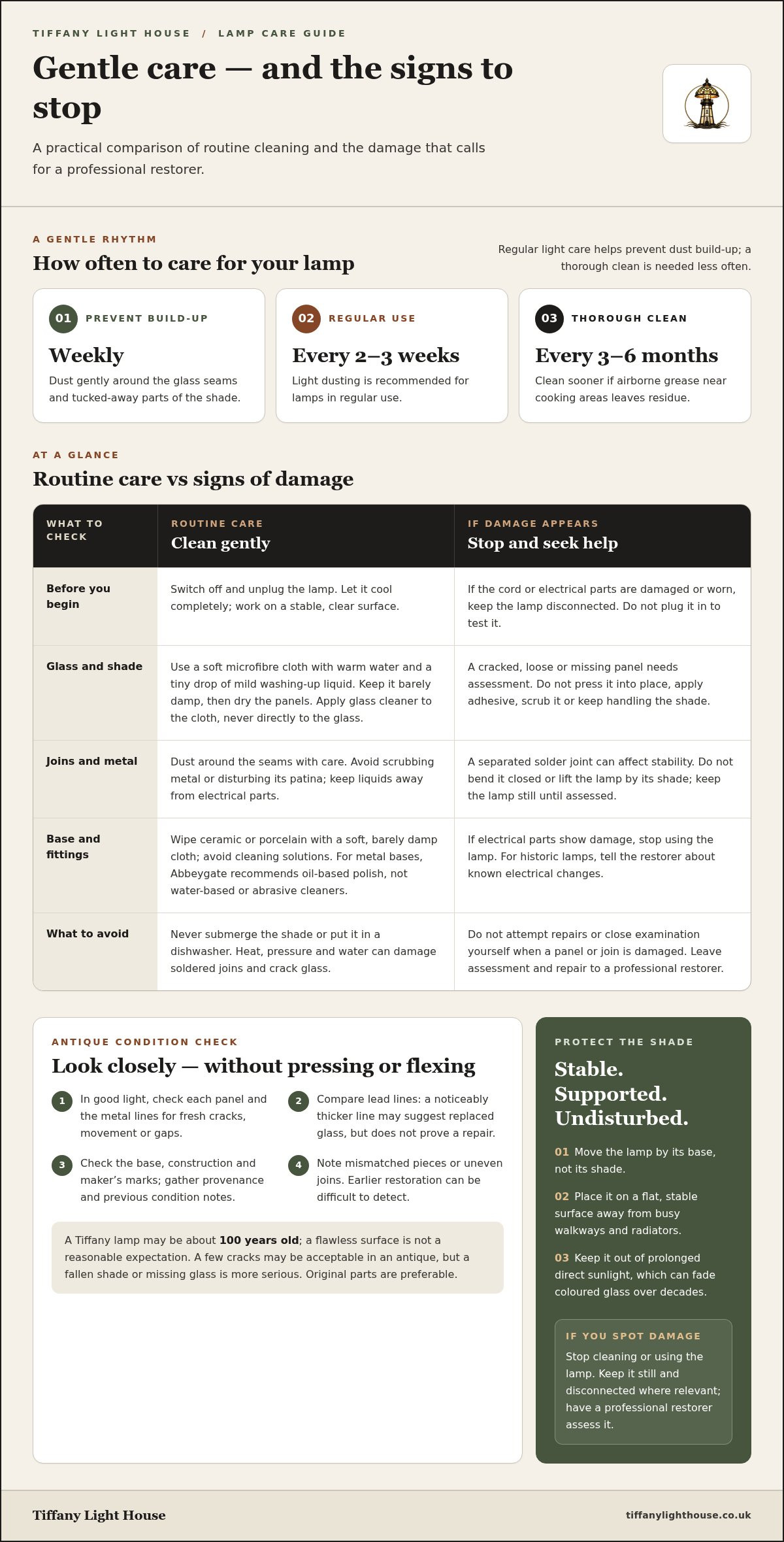
Regular dusting does more for a Tiffany shade than an occasional heavy clean. This Tiffany lamp care guide recommends weekly dusting to prevent build-up, or light dusting every two to three weeks for lamps in regular use. A thorough clean is usually needed only every three to six months.
It may be tempting to reach for a damp cloth straight away, but gentle care matters. Switch the lamp off, let it cool completely, then clean the glass with a barely damp, soft cloth. Never submerge the shade.
You’ll also learn how to spot cracks, loose joins and signs of earlier repairs on an antique lamp, and when damage calls for a professional restorer. We’ll cover simple dusting habits, safe cleaning steps and the warning signs that mean it’s time to stop and seek skilled help.
Key Takeaways
- Dust gently around the glass seams and tucked-away parts of the shade, where loose dust can gather.
- Assess an antique by looking closely at its glass, metal joins, maker’s marks and signs of earlier repairs.
- Stop handling a lamp if you spot cracked glass, a separated solder joint or damaged electrical parts; these call for a professional restorer.
- Move a Tiffany lamp by its base and keep it on a stable surface to help protect its delicate shade.
How Often Should You Clean a Tiffany Lamp?
This Tiffany lamp care guide recommends weekly dusting to prevent build-up, or light dusting every two to three weeks for lamps in regular use. A thorough clean is usually sufficient every three to six months. Follow a gentle routine to protect the glass and its joins.
-
Unplug and Cool the Lamp
Switch off and unplug the lamp, then let it cool completely before cleaning or changing its bulb. Place a table lamp on a stable, clear surface so it cannot be knocked while you work. This keeps you away from a live electrical connection and prevents contact with hot glass or fittings.
- Set a dusting rhythm. Weekly dusting helps prevent build-up around the shade’s seams; for lamps in regular use, light dusting every two to three weeks is recommended. Plan a thorough clean every three to six months. A lamp near cooking areas may need attention sooner, as airborne grease can leave residue.
- Clean glass pieces with a soft microfibre cloth dampened with warm water and a tiny drop of mild washing-up liquid. Keep the cloth barely damp, not wet, and dry the panels afterwards. If using glass cleaner, apply it to the cloth, never directly to the glass. This Tiffany lamp care guide favours gentle cleaning to preserve the shade’s colour and appearance, while keeping its glow warm and inviting.
-
Clean Bases and Metal Fittings
Wipe a ceramic or porcelain base with a soft cloth dampened in warm water, without soaking it. Avoid cleaning solutions on these surfaces. Abbeygate recommends using oil-based polish on metal Tiffany-style lamp bases and avoiding water-based or abrasive cleaners. Work gently around the fittings, keeping liquid away from electrical parts.
- Protect antique lamps with light cleaning, and avoid anything that could scratch original surfaces. Don’t scrub metal or disturb the patina. A few cracks may be acceptable in an old lamp, but retaining original parts is preferable. Never put a shade in a dishwasher or submerge it, as heat, pressure and water can damage soldered joins and crack glass. Use this Tiffany lamp care guide as a reminder to clean gently and carefully.
When to consult a professional restorer
Stop cleaning or using a Tiffany lamp if its shade, joins or electrical parts show damage. These signs need careful assessment, not a closer scrub.
- Set the lamp aside if a glass panel is cracked, loose or missing. A small crack can be part of an antique’s history, but fresh damage or shifting pieces may worsen if the shade is handled. Don’t press the glass back into place or apply adhesive. A professional restorer can assess the panel and the surrounding stained-glass structure.
- Seek restoration advice if a solder joint has separated. Raised metal lines hold the individual glass pieces together, so a gap can affect the shade’s stability. Avoid lifting the lamp by its shade or attempting to bend the join closed. Keep the lamp still until the damage has been assessed.
- Stop using the lamp if its cord is damaged or its electrical components show signs of wear. Don’t plug it in to test whether it still works. Keep it disconnected and contact the seller about the electrical damage. For a historic lamp, tell the restorer about any known electrical changes before work begins.
- Look for signs of earlier restoration, but don’t assume every replacement makes a lamp unsound. Christie’s specialists advise inspecting Tiffany lamps for restoration, which can be difficult to detect. Compare lead lines across the shade: a conspicuously thicker line may indicate replaced glass. Note mismatched pieces or uneven joins, then leave close examination and any repair to a restorer.
- Discuss the lamp’s history and character before restoration starts. For antique shades, retaining original parts is preferable, and sensitive restoration may not affect value. Share any records, previous condition notes and details of known repairs. A restorer can assess cracks, joins and replacement pieces together, rather than treating one mark as the whole story. This helps protect both the stained-glass craftsmanship and the lamp’s place in your home.
Assessing the condition of antique lamps
Protect Tiffany lamp glass by keeping the shade stable, handling the lamp by its base and avoiding knocks. Look for cracks, loose pieces and changes to the joins before moving or cleaning an antique.
- Examine the shade in good light, looking across each panel and the metal lines between them. Traditional stained-glass shades have separate pieces, with raised joins that can usually be seen and felt. Check for a fresh crack, a panel that moves or a gap in a join. Don’t press or flex the glass to test it.
- Consider the lamp’s age before judging its condition. Christie’s specialists note that a Tiffany lamp may be about 100 years old, so a flawless surface isn’t a reasonable expectation. A few cracks can be acceptable; a fallen shade or missing glass is more serious. Record visible damage before handling the lamp further.
- Compare the lead lines across the shade. A conspicuously thicker line may suggest that a glass piece has been replaced. Look for differences in colour, texture and join width around that area. These details can prompt further investigation, but they don’t prove a repair by themselves.
- Check the base, construction and any maker’s marks, then gather provenance or previous condition notes. Age, marks, construction, history and condition all help when identifying a historic lamp. Original parts are preferable, although good restoration may not affect value. Keep your notes together rather than removing or altering any components.
- Prevent new cracks by placing the lamp on a flat, stable surface away from busy walkways and heat sources such as radiators. Handle it by the base, not the shade. Keep it out of prolonged direct sunlight, which can fade coloured glass over decades. These steps protect delicate panels, whether you’re assessing a table lamp or floor lamp in an antique lighting collection.
- Assess colour and pattern alongside condition. Tiffany collectors prize strong, saturated hues, and colour can matter more than an elaborate floral design. When browsing an antique collection, note how the glass looks in daylight and when illuminated, then compare those observations with the lamp’s marks and history.
Regular dusting of Tiffany-style lamps
Light dusting keeps loose particles from settling along the shade’s surface and seams. Use a repeatable routine rather than waiting until dust dulls the colour or obscures the pattern.
- Choose a regular interval and stick to it. Weekly dusting is recommended to prevent build-up on glass panels. For Tiffany lamps in regular use, light dusting every two to three weeks is also recommended. Let the room’s dust levels and the lamp’s use guide your routine, and note the date to keep cleaning gentle and regular.
- Choose a soft, flexible feather duster for loose dust, especially inside an inverted pendant shade. Its pliable tip reaches tucked-away areas without pressing against individual glass pieces. Move slowly across the shade, following its shape. Don’t push the duster between seams or force it into a narrow opening.
- Work from the top of the shade down, using light strokes over each section. Pause at the copper-foil seams and inspect for dust caught along the joins. A clean, soft brush can help reach a detailed pattern, but keep its bristles gentle. Stop if the shade shifts or a glass piece feels loose.
- Give the whole lamp a brief visual check as you dust. Look for a new crack, a gap between joins or build-up on the base. Regular attention makes changes easier to notice. Avoid vigorous rubbing, which can put unnecessary pressure on delicate stained glass.
- Adapt the routine to the lamp’s setting. A pendant in an open room may collect dust differently from a table lamp near cooking areas, where airborne grease can cling to the surface. Dusting removes loose particles, but won’t lift greasy residue. Reserve a thorough clean for that task instead of rubbing harder.
- Remember why the routine matters: Tiffany Studios shades are assembled from separate pieces, and hand-arranged glass can vary in colour and texture. Gentle dusting keeps the pattern clear without disturbing the handcrafted character. A few careful strokes preserve the warm glow that brings character to a room.
Tiffany Light House: Tiffany Ceiling Lights
Tiffany Light House offers Tiffany Ceiling Lights for rooms that call for colour overhead and a softly patterned glow. The range also includes Tiffany Floor Lamps, Tiffany Table Lamps and Tiffany Wall Lights, offering different ways to bring stained-glass character into your home.
Each shade is handcrafted from individually cut and arranged glass, using the traditional copper-foil technique. The distinct pieces give every shade its own arrangement of colour and texture. Choose a fitting that suits the room and where you want the light to fall, whether above a dining table or beside a reading chair.
Regular gentle care helps keep handcrafted glass looking its best. For a new focal point in your home, you’re welcome to browse the Tiffany lighting collection.
Keep the colour and craftsmanship in view
A Tiffany lamp can remain part of a room’s character through changing seasons and styles. Give it a place where its glass can catch the light, and let its pattern become part of the room’s everyday rhythm. A brief visual check as you enjoy the lamp can help you notice changes early, without making its care feel like a chore.
Keep a simple note of any marks or changes you observe. Over time, this creates a useful record of the lamp’s condition and gives you a clearer starting point if you need advice. This Tiffany lamp care guide is a practical beginning; your own observations can shape a routine that suits the lamp and your home.
If you’re considering stained-glass lighting for a room, or would like help choosing a fitting, contact Tiffany Light House. Let a little colour find its place in your home.
Frequently Asked Questions
How do I remove yellow staining from old Tiffany glass?
Try a gentle clean first, as surface residue may lift from the glass. Use a barely damp, soft cloth and mild washing-up liquid, then dry the panel. If yellowing remains, don’t escalate to bleach, solvents or abrasive rubbing. Discolouration may not be surface dirt, and aggressive treatment could harm the glass or joins. Ask a professional restorer to assess persistent staining.
What cleaning products should you avoid on Tiffany lamps?
Avoid abrasive cleaners, soaking and dishwasher cycles. Heat, water pressure and detergent can damage soldered joins or crack glass. Don’t spray cleaner directly onto a shade; apply it to a soft cloth instead. For metal bases, avoid water-based and abrasive cleaners. Wipe ceramic or porcelain bases with a cloth dampened with warm water, without using cleaning solutions.
How often should a Tiffany lamp be cleaned and inspected?
Dust weekly to help prevent build-up; for a lamp in regular use, light dusting every two to three weeks is recommended. A thorough wet clean is usually sufficient every three to six months. Look over the glass and joins during each dusting. If you notice a fresh crack, loose piece or separated solder joint, stop and arrange a professional assessment.
What are the risks of using heat or harsh chemicals on stained glass lamps?
Heat can stress the soldered joins that hold a shade’s glass pieces together. Dishwasher heat, water pressure and detergent can damage those joins or crack the glass. Abrasive cleaners may scratch surfaces, while unsuitable products can affect metal finishes. Keep cleaning gentle and localised: don’t immerse the shade or use a hot-air tool to dry it.
How to replace a Tiffany lamp bulb and what wattage to use
Switch off and unplug the lamp, then let it cool completely before changing the bulb. A warm-white LED at 2700K is typically suitable; never exceed the maximum wattage stated on the lamp’s label.


