

What if the warmest change to a room isn’t another cushion, but a pool of coloured light in just the right corner? Tiffany lamps for cosy rooms bring colour, pattern and individuality to a space. To choose one that feels at home with your existing furnishings, consider where you’ll place it, what you do there and how its stained glass will sit against the room’s colours.
The key is thoughtful placement, not filling every surface with ornaments or adding more light than you need. A table lamp can add character beside a favourite chair; a floor lamp can make a seating area feel more considered; wall and ceiling lights bring stained-glass detail to other parts of the room. This guide explains how to compare those options and balance their colour with furniture and other lighting. Each Tiffany Light House shade is made by hand from individually cut and arranged glass using the traditional copper-foil technique. With a few considered choices, a Tiffany lamp can add warmth and character without overwhelming the room.
Key Takeaways
- Start with the room’s purpose, then choose a lamp form and position that suit how you use the space.
- Compare the shade’s colours and pattern with your walls, fabrics and furnishings to decide how prominent you want it to be.
- Tiffany lamps for cosy rooms can suit modern and compact interiors when you consider the surrounding décor and leave the arrangement room to breathe.
- Ceiling lights, floor lamps, table lamps and wall lights each bring stained-glass character to a different part of the home.
- Each Tiffany Light House shade is handcrafted from individually cut and arranged glass using the traditional copper-foil technique.
Why Tiffany lamps bring a softer, cosier feeling to a room
As evening settles, a room can take on a different character. A coloured-glass shade draws the eye and adds a point of interest to a familiar corner. It doesn’t need to transform the whole space. A well-placed lamp can make a room feel more personal and inviting.
A cosy room is comfortable, welcoming and suited to what you do there, whether that means reading, sharing supper or winding down before bed. Tiffany lamps for cosy rooms contribute through colour, pattern and the design of the shade. The effect depends on the lamp and the colours and textures around it, so the same shade can feel different in different homes. For historical context, the Tiffany lamp Wikipedia article explores the lamp’s design and its association with the Art Nouveau movement.
A Tiffany lamp can give a room a distinctive point of colour and character, chosen to suit the way you use the space. Its role is atmospheric, not automatically a substitute for brighter light. If you read or work on detailed tasks, consider how the lamp will sit alongside the light you need to see clearly.
What makes a room feel cosy with a Tiffany lamp?
A decorative lamp can become a gentle focal point in a space you already know well. The glass brings colour and pattern, while nearby fabrics, wood and other finishes add texture. Together, these details can make an evening setting feel settled and individual without requiring new furniture or a complete change of décor.
There’s no single interior style a Tiffany shade has to match. It can sit amongst traditional furnishings or provide colourful contrast in a simpler room. Consider whether its design feels pleasing to you and supports the way you want to spend time there.
Which Tiffany lamp shapes suit different cosy corners?
Start with the place where you plan to use the lamp. A table lamp can sit on a suitable side table beside a favourite chair. A floor lamp offers another way to bring character to a seating area, while a wall light can add colour to a quieter part of the room.
Ceiling lights bring stained-glass detail overhead. To compare the options, look at your furniture, available surfaces and daily routines. A floor lamp may suit a corner with space around it; a table lamp can make a smaller surface feel more considered. For reading, think about atmosphere and task lighting as separate needs.
These choices are about comfort, not rigid decorating rules. Consider how the lamp’s colour and pattern relate to the room, then check whether the arrangement feels balanced and welcoming. A cosy space is one you enjoy returning to.
How coloured Tiffany glass shapes a room’s mood
Coloured glass brings colour and pattern into a room. The shade’s overall impression depends on its design and surroundings, so there’s no single mood that every Tiffany lamp creates. A quieter palette may sit subtly against one wall, while a more vivid pattern can become a lively focal point amongst other furnishings.
Think of the lamp as part of a larger picture. Wall colour forms the backdrop; curtains, cushions, rugs and wooden furniture add their own tones and textures. A shade that stands out against pale walls may blend into a room already filled with rich colour. It’s the relationship between these elements, rather than the lamp alone, that shapes the atmosphere.
There’s craftsmanship within the pattern, too. Each Tiffany Light House shade is made from individually cut and arranged glass, joined using the traditional copper-foil technique. The arrangement gives the shade its distinctive visual character, whether you want a gentle accent or a more noticeable feature.
Choosing a colour mood that feels restful
Start by noticing the colours already in your room. In a neutral space, a patterned shade can bring in colour without the need for other bold additions. In a more colourful interior, look for a shade that relates to one or two tones already present. The colours don’t need to match exactly; a subtle echo can help the lamp feel at home.
For example, pale walls and natural-toned furniture can give a coloured shade room to stand out. In a room with patterned cushions or a strong wall colour, a subtler relationship between the colours may feel more settled. These are options, not rules. Choose the combination that feels restful to you.
Let the lamp’s pattern sit comfortably with the décor
A patterned shade has visual presence. If it’s the main decorative detail in a corner, simpler nearby surfaces can give the eye a place to rest. If the room already has several patterns, look at how the shade’s shapes and colours work alongside them. You don’t need every colour to match or to follow one particular period style.
Look at the whole corner from the places where you’ll usually see it: from a chair, the doorway or across the room. Does the lamp feel like a considered accent, or does it compete with another focal point? If you’re drawn to a stronger colour, a cushion, book or small accessory in a related tone can create a visual connection without repeating the pattern everywhere.
For Tiffany lamps for cosy rooms, aim for a relationship that feels comfortable rather than perfectly coordinated. Consider the shade alongside your existing colours, then trust your eye. To explore a coloured-glass option for a reading corner, browse the Tiffany floor lamps and see which designs feel at ease with your surroundings.
Will a Tiffany lamp overwhelm a modern or compact room?
Not necessarily. A decorative lamp can feel at home in a contemporary or compact room when the rest of the arrangement feels balanced. The goal isn’t to make the lamp disappear, but to give its colour and pattern space to be appreciated. Furniture, textiles and other decorative details all contribute to the overall effect.
In a smaller room, a Tiffany shade may already draw the eye. If several other patterned or highly decorative objects gather around it, the corner can feel busy. Giving the lamp some breathing space can make it read as a deliberate focal point. That isn’t a universal rule: a room with layered collections can feel warm and personal, too. Aim for an arrangement that’s comfortable to live with.
Look at the scene as a whole, rather than judging the lamp in isolation. Is it beside a chair, on a table or close to a favourite piece of furniture? Does its pattern sit alongside the surrounding surfaces, or compete for attention? Viewing the arrangement from across the room can help you decide whether it feels settled.
Can Tiffany lamps work with contemporary décor?
Handcrafted stained glass can bring an appealing contrast to clean-lined furniture and quieter surfaces. Picture a simple reading chair, a plain side table and a Tiffany floor lamp nearby. The glass adds detail, while the uncluttered furnishings leave space for that detail to register. In another contemporary home, existing artwork or patterned fabrics may create a different balance. Neither arrangement is a formula. The aim is a room that feels like yours.
How to make a statement lamp feel balanced
Start with one clear focal point in the corner. If the lamp is the feature, avoid crowding the surface beside it with ornaments. Then look for a small, gentle connection elsewhere, perhaps a cushion or book that picks up one of the shade’s colours. This can help the lamp belong without making the whole room match.
Practical placement matters as much as colour. Consider how the lamp relates to the chair, table and nearby patterns, and whether the area remains comfortable to use. In a compact room, don’t treat every empty patch as a place to add something. Visual breathing space can make the objects you choose feel more intentional.
- Step back: View the lamp with the furniture and décor around it, not just close up.
- Choose a focus: Decide whether the lamp or another feature should lead the eye in that corner.
- Repeat gently: Pick up one shade colour in a small detail, if it feels natural.
- Leave room: Keep some nearby surfaces simple, especially where patterns already gather.
Tiffany lamps for cosy rooms don’t have to dictate an interior style or dominate a small space. Considered placement and breathing room can help a coloured-glass lamp bring character to modern furnishings while keeping the rest of the room calm.
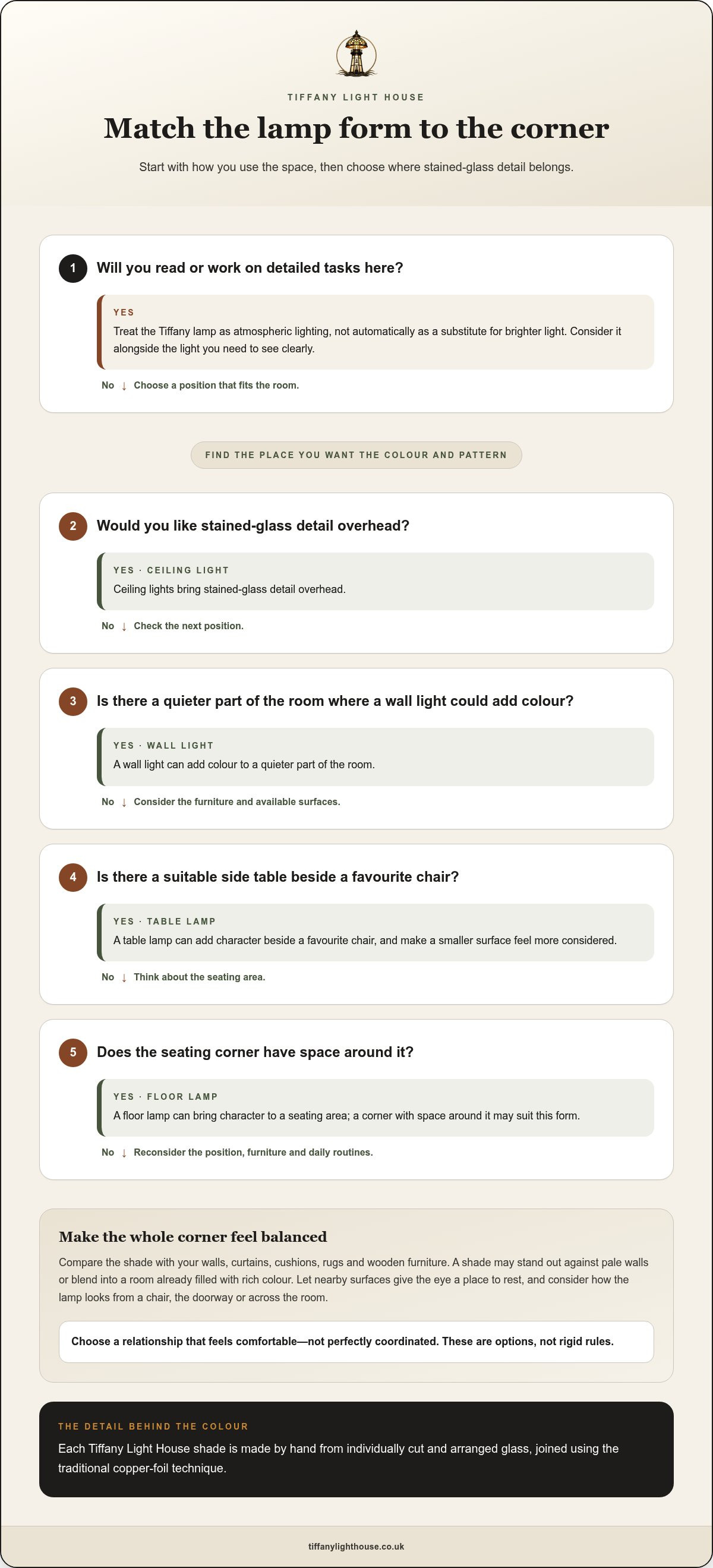
Where to place Tiffany lamps for a warm, welcoming room
Choose a place where a Tiffany lamp’s colour and pattern can become part of everyday life. Rather than picking a spot simply because it’s empty, start with what you do in the room. Then consider which lamp form suits that setting and how it will sit alongside the furniture and other lighting.
- Choose the activity. Think about the moments you want to make more inviting, such as settling into a chair, sharing a meal, winding down in the bedroom or arriving home.
- Find a natural corner. Look for a place connected to that activity, such as a side table near a reading chair or a quieter part of the dining room.
- Assess the balance. Notice what the lamp will sit beside and what else draws the eye. Space around it can help the shade feel considered rather than crowded.
The lamp type can guide its placement. A table lamp suits a suitable surface, while a floor lamp can bring a point of interest beside a chair. Wall lights add colour to a chosen part of the room, and a ceiling light introduces stained-glass detail overhead. Each has a different role. A decorative lamp can sit alongside other lighting rather than having to serve every activity by itself.
Create a cosy focal point in a living or dining room
In a living room, a table lamp on a side table can bring character to the place where you pause with a book or a cup of tea. A floor lamp near a reading chair offers another way to make that familiar corner feel more personal. In a dining room, a lamp near a quieter seating area can add a decorative note between meals. Keep nearby surfaces and patterns simple enough for the lamp to sit comfortably amongst them.
Think, too, about the room’s practical rhythm. If you read or do detailed tasks there, consider how the lamp will work with the light you use for those activities. Layering different sources lets one light contribute atmosphere without having to meet every need.
Bring softer character to bedrooms and hallways
A table lamp can add a considered touch to a bedroom surface, while a wall light can bring colour to another part of the room. The right choice depends on how you use the space and what feels comfortable around the furniture. In a hallway, a Tiffany wall light or ceiling light can offer a welcoming moment of colour as you come home. Let the setting guide the choice, rather than following a fixed rule about which lamp belongs in which room.
For Tiffany lamps for cosy rooms, placement connects a decorative detail with the way you live. Explore Tiffany lighting for your home and consider which lamp form might feel at ease in your favourite corner.
Find a Tiffany lamp for a cosy room at Tiffany Light House
Once you’ve pictured where a lamp might sit and how you want the room to feel, choose a form that suits the space. Tiffany Light House offers ceiling lights, floor lamps, table lamps and wall lights, giving you different ways to bring stained-glass detail into a familiar setting. Begin with a simple question: where would a touch of colour feel most at home?
Choose a lamp form that fits the room’s feeling
For a reading corner, a floor lamp can bring a decorative presence beside your favourite chair. A table lamp may feel more natural on a side table or bedroom surface. Wall lights offer another way to add character to a quieter part of a room, while a ceiling light can make stained-glass detail part of the wider setting. Each option creates a different relationship with the furniture and the room around it.
Think about the mood you’d like to create. Perhaps you want a gentle accent in a restful bedroom or a more noticeable detail in a living room where family and friends gather. A hallway might suit a small moment of colour as you come home. There’s no single correct choice. Consider the room’s everyday purpose, the surfaces available and the visual balance you’ve already created.
Explore handcrafted stained-glass lighting at Tiffany Light House
Each Tiffany Light House shade is made by hand from individually cut and arranged pieces of glass, using the traditional copper-foil technique. The careful arrangement gives every shade its pattern and character. It’s a detail to consider as you choose a lamp that will become part of your home, not simply an object to fill an empty spot.
Tiffany Light House offers free UK delivery and free 30-day returns. Advice from the UK team can also help you consider the options. Browse the different lamp forms at your own pace and think about how each might sit within your room.
Tiffany lamps for cosy rooms can bring colour and craftsmanship to everyday corners, from a reading spot to a quiet hallway. Explore Tiffany Light House’s Tiffany-style lighting and find a lamp form that feels right for your space.
Bring a little more character to your favourite corner
A room doesn’t need a full refresh to feel more welcoming. Sometimes one carefully chosen detail gives a familiar corner a new sense of warmth. When considering Tiffany lamps for cosy rooms, start with the place you most enjoy spending time in, then picture the colour and character you’d like to bring to it.
At Tiffany Light House, each shade is handmade from individually cut and arranged glass, joined using the traditional copper-foil technique. Free UK delivery and free 30-day returns are available as you browse, and the UK team can offer advice. Let your room and your own sense of comfort guide your choice.
Ready to find a stained-glass lamp that feels at home in your space? Explore Tiffany-style lighting at Tiffany Light House and find a piece that speaks to you. A gentle pool of colour could be the beginning of a cosier corner, shaped around the way you like to live.
Frequently Asked Questions
Can I use an LED bulb in a Tiffany lamp?
Possibly, provided the bulb suits the lamp’s holder and stated requirements. Check the lamp information and the markings on the existing bulb before choosing a replacement. LED bulbs use less electricity than traditional incandescent bulbs for comparable light output, but compatibility still matters. Don’t force a bulb into the holder or exceed the lamp’s stated limits. If you can’t identify the correct type, seek advice before switching it on.
Can a Tiffany lamp be dimmed?
Only if the lamp’s electrical components and the bulb are both suitable for dimming. A dimmable bulb alone doesn’t make a lamp dimmable. Look for dimming information in the lamp instructions and on the bulb packaging, and don’t assume a standard switch can adjust brightness. If you’re considering a separate dimmer, make sure it’s compatible with the lamp and bulb combination before use.
How do I clean a Tiffany lamp shade safely?
Switch the lamp off, unplug it and let it cool before cleaning. Use a soft, dry cloth to gently lift dust from the glass, taking care not to press hard on the shade or its joins. Avoid soaking the shade, abrasive cleaners and sharp tools, which may damage its surface or construction. If the lamp’s care instructions give different guidance, follow those directions.
Do Tiffany lamps need special wiring?
There isn’t one answer for every lamp. A plug-in table or floor lamp is different from a ceiling or wall light connected to a home’s fixed wiring. Don’t alter a lamp’s wiring yourself. If a fitting needs connecting or existing wiring needs changing, ask a qualified electrician to assess the work. Never use a lamp with damaged wiring, a loose connection or a cracked plug.
Are Tiffany lamps energy efficient?
Energy use depends on the bulb, how long the lamp is switched on and the electricity it needs to operate. An LED bulb can use less electricity than an incandescent bulb for comparable light output, if it’s compatible with the lamp. Check the bulb’s energy information and the lamp’s requirements before buying. Switching off a lamp when it isn’t needed can also avoid unnecessary use.
Can a Tiffany lamp be the only light in a room?
It can be the room’s only lamp, but whether it provides enough light depends on the room and what you’re doing. A decorative shade may create an appealing point of light, yet reading, sewing or other close work can call for brighter, more direct illumination. Try the room at the time you’ll use it. If you find yourself straining to see, add a suitable task light.
What is the difference between a Tiffany lamp and a Tiffany-style lamp?
“Tiffany lamp” can refer to historic lamps made by Tiffany Studios, associated with designer Louis Comfort Tiffany. “Tiffany-style” generally describes later lamps that draw on the look of stained-glass shades, rather than claiming to be originals from the studio. The distinction matters when discussing an antique’s history or provenance. Tiffany Light House sells handcrafted Tiffany-style stained-glass lighting, not original Tiffany Studios antiques.


