

A wisteria pattern Tiffany lamp is recognised by its cascading, coloured-glass shade. The original Wisteria Lamp was designed by Clara Driscoll, and its shade was handcrafted from hundreds of individual glass pieces. Their colours create a striking pattern and shape the light the lamp gives.
That blend of artistry and warm illumination is part of the appeal. When choosing a lamp, consider how its colours will look in your room, whether the shade and base feel balanced, and how its size and electrical details suit the space.
This guide explains what to look for in the wisteria shade, coloured glass, leaded construction and bronze base. It also covers dimensions, bulb details and practical proportions, helping you compare the features that matter and find a lamp that feels at home in your room.
Key Takeaways
- Compare the glass colours in daylight and when lit; denser, darker sections absorb more light, while pale tones create a warmer glow.
- Look for individually cut glass and leaded construction to understand how the shade’s pattern is assembled.
- Measure the space for the shade’s diameter, overall height and base footprint, then consider how the lamp will sit on its surface.
- Match the bulb’s cap type and dimensions to the fitting, and stay within the lamp’s maximum wattage.
- Keep the distinction between the historic Wisteria Lamp and contemporary lamps clear when considering dates, materials and design details.
Wisteria shade design and coloured glass
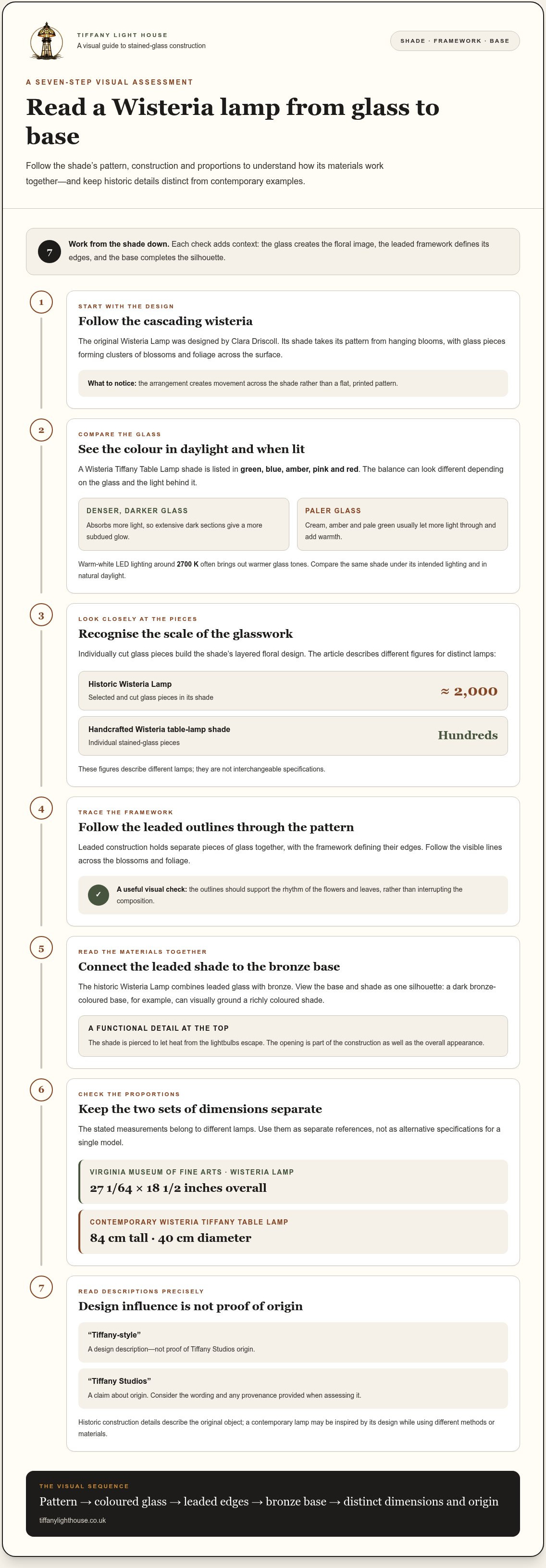
Clara Driscoll designed the Wisteria Lamp, whose cascading shade takes its pattern from hanging wisteria blooms. Individual glass pieces form clusters of blossoms and foliage, creating movement across the shade. The design is decorative and practical: each colour changes how the lamp appears, whether it is switched on or resting in daylight. A wisteria-pattern Tiffany lamp can therefore look quite different from one room to another.
The Wisteria Tiffany Table Lamp shade is listed in green, blue, amber, pink and red. Blue and purple glass gives a cooler, more dramatic appearance when the lamp is unlit. Once illuminated, the effect depends on the glass and the light behind it. View the shade in both conditions before deciding which palette suits your room.
Glass density matters as much as colour. Dense coloured sections absorb light, so a shade with extensive dark glass gives a more subdued glow. Cream, amber and pale green sections usually let more light through and add warmth. For example, a shade with pale green foliage and amber accents may feel softer than one dominated by deep blue and purple.
Blue wisteria designs offer a particularly vivid contrast. Blue and purple blossoms stand out against green leaves, while darker areas create depth when the lamp is unlit. Consider your room’s existing colours: a blue shade can complement a restrained, neutral setting, while patterned surroundings may compete with its detailed glasswork. A relatively quiet background lets the cascading design remain the focal point.
Each handcrafted Wisteria Tiffany Table Lamp shade contains hundreds of individual stained-glass pieces. Their arrangement gives the floral pattern its layered appearance, rather than a flat printed effect. Warm-white LED lighting around 2700 K often brings out warmer glass tones. Compare the same shade under its intended lighting and natural daylight, since the visible balance changes with illumination.
How do you clean and care for a stained-glass Wisteria lamp? Switch it off and let the bulbs cool, then gently dust the shade with a soft, dry cloth. Avoid abrasive materials and excess moisture around the glass joints. Clean small sections at a time without pressing on the glass.
What are the risks of buying a fake or misrepresented Tiffany Wisteria lamp? You may pay for an antique or particular construction that the lamp does not have, and its materials, age or workmanship may differ from your expectations. Treat “Tiffany-style” as a design description, not proof of Tiffany Studios origin. Examine the wording and any provenance provided before judging a lamp as an original.
Leaded glass and bronze construction
The historic Wisteria Lamp combines leaded glass with bronze. Around 2,000 individual glass pieces were selected and cut for its shade. That figure offers a sense of the work behind the flowing floral design. Each piece contributes to the whole, while the joins create visible outlines across the surface. Look closely at how those lines follow the blossoms and foliage, rather than interrupting them.
Leaded construction describes how separate pieces of glass are held together. In the Wisteria Lamp, the glass sections form the shade’s patterned surface, with the leaded framework defining their edges. This structure gives the design its intricate appearance. Consider the pattern as a complete composition, not simply as coloured panels. Notice whether the outlines support the rhythm of the flowers and leaves.
The bronze parts provide a contrast to the glass. On the historic lamp, bronze is part of its construction alongside the leaded shade. When assessing a lamp, view its base and shade together. A dark bronze-coloured base, for example, can visually ground a richly coloured shade. The materials should feel coherent in the room, rather than competing for attention.
The shade’s top has a practical feature: it is pierced to let heat from the lightbulbs escape. This detail is part of the Wisteria Lamp’s construction, not merely decoration. When examining a similar design, notice whether the upper opening is clear and unobstructed. Consider the opening and shade shape together, as both contribute to the lamp’s appearance and use.
For a careful visual assessment, start with the glass. Look for individual sections and follow their outlines across the design. Then observe how the framework meets the shade’s edge and top. Finally, compare the shade with its base. These simple steps help you understand the materials and how they work together, rather than relying only on a product description.
Construction details also help distinguish a historic object from a contemporary lamp inspired by it. The original Wisteria Lamp’s leaded glass and bronze describe that particular object. A modern stained-glass lamp may use different methods or materials. Read descriptions precisely: “Wisteria-style” identifies a design influence, while “Tiffany Studios” makes a claim about origin. Those phrases are not interchangeable.
For a buying decision, consider the craft, materials and intended setting as one picture. The glass carries the pattern; the framework defines its boundaries; the base completes the silhouette. On the original Wisteria Lamp, around 2,000 cut pieces make that relationship especially clear. Understanding those elements helps you compare construction thoughtfully, rather than judging a lamp by colour alone.
Product dimensions and electrical information
Dimensions help establish whether a Wisteria lamp will suit its intended surface. The Virginia Museum of Fine Arts records its Wisteria Lamp as 27 1/64 × 18 1/2 inches overall. A contemporary Wisteria Tiffany Table Lamp has different measurements: 84 cm tall and 40 cm in diameter. Treat these as details for distinct lamps, not interchangeable versions of one specification.
For a UK room, start with the available height and width. Measure the table, shelf or bedside surface, then allow space around the shade. A 40 cm diameter shade needs room beyond its central footprint, particularly beside books, a bed or other objects. An 84 cm lamp may also sit higher than expected on a standard table. Consider the combined height of the furniture and lamp in the room.
Weight affects where the lamp can sit. The Wisteria Tiffany Table Lamp weighs 9.8 kg, so its supporting surface needs to feel stable and suitably substantial. Think about the route from the delivery point to the final position, too. A large, heavy lamp is less convenient to move regularly. Choose a place where the shade can be enjoyed without frequent handling.
Electrical details shape everyday use. The Wisteria Tiffany Table Lamp uses three 40 W E27 bulbs and is not dimmable. E27 identifies the bulb cap type, while the 40 W figure is the stated wattage for each bulb. Before selecting replacements, match the cap, compare bulb dimensions with the available space, and stay within the lamp’s maximum wattage.
The same table lamp has a Class 1 earthed electrical classification. This is a specific detail of that model, not a general description of every lamp with a wisteria shade. Keep the product’s electrical information alongside its dimensions when comparing options. For example, a lamp may fit a bedside table physically, yet its bulb arrangement or non-dimmable operation may not suit your preferred use.
Make a simple comparison before choosing: record the lamp’s overall height, shade diameter, weight, bulb cap, bulb quantity and wattage. Then compare those details with the space and lighting routine you have in mind. The Virginia Museum of Fine Arts dimensions describe its historic Wisteria Lamp; the 84 cm, 40 cm and 9.8 kg details describe a table lamp. Keeping those identities clear makes each measurement useful.
Finally, consider where the light needs to fall. A bedside lamp, for instance, may need to illuminate a book without overwhelming the table. Bulb dimensions affect how the bulb sits within the shade, while the stated cap and wattage narrow suitable choices. Consider the dimensions and electrical details together to judge fit, placement and daily use before settling on a design.
Shade and base proportions
A well-proportioned Wisteria lamp balances its broad glass shade with a stable-looking base. Judge both parts together, rather than choosing by shade pattern alone. The base should support the shade and look visually balanced beneath it. A slender base under a wide shade may appear top-heavy, while a broader base can give the design a grounded presence. Compare the silhouette from the front and side.
Begin with three measurements: shade diameter, overall height and base footprint. Record them beside the space available on your table or cabinet. The Wisteria Tiffany Table Lamp, for example, has a 40 cm diameter shade and stands 84 cm tall. Those dimensions show why a small side table may feel crowded, even if its surface can hold the base. Consider the lamp’s full outline, not just its contact area.
Next, assess the base footprint against the furniture. The base needs to sit securely, with enough clear surface around it for everyday items. On a bedside table, allow room for a book or glass without placing objects close to the shade. On a console, compare the lamp’s footprint with the table depth. These practical checks help the lamp feel intentional, rather than squeezed into a corner.
Consider the lamp’s height from the chair or sofa where it will be used. Sit in your usual position and observe the shade’s lower edge. It should screen the bulb from direct view while allowing useful light to reach a table or page. For a reading chair, check the view from the seat and from beside the chair. A shade that sits too high may expose the bulb; one that sits too low may obstruct the task.
A simple paper outline makes proportion easier to judge. Mark the base footprint on paper, then sketch the shade’s diameter. Place the shapes on the intended surface and consider nearby furniture, such as a chair arm or headboard. This gives you a sense of visual scale before you commit to a position. It also reveals whether the shade overlaps objects or interrupts a clear route.
Finally, compare the lamp’s height with nearby features. A Wisteria shade beside a low sofa may become a focal point, while the same silhouette can dominate a narrow bedside setting. Check the lamp from the doorway and from its intended seat. The proportions should feel balanced from both views, with the base supporting the shade and the light reaching the place it needs to serve.
Treat the shade diameter, overall height and base footprint as a single set of checks when choosing a wisteria Tiffany lamp. A shade may seem suitably scaled on its own, but its relationship to the base and available surface determines whether the whole lamp fits. Keep all three measurements in view when comparing possible positions, rather than letting one feature decide the choice.
Include the seated view in your proportion check. From a seated position, a wisteria shade’s lower edge should screen the bulb while allowing useful light to reach the table or page. If it does not, reconsider the lamp’s placement or whether its proportions suit the intended spot.
Lamp date and materials
The historic Wisteria Lamp combines leaded glass and bronze. Its date and identifying details help distinguish the original from later lamps inspired by its design.
Lamp Materials
The Wisteria Lamp’s shade is made from leaded glass, while bronze forms part of its construction. Consider how these materials work together: the glass carries the floral design, and the bronze contributes to the lamp’s structure and appearance. The historic shade is unsigned, so its materials alone cannot establish who made it. Consider documented details alongside the object itself.
Identifying an Authentic Wisteria Lamp
How can you identify an authentic Tiffany Studios Wisteria lamp? The Virginia Museum of Fine Arts dates its Wisteria Lamp to around 1901-02 and records its base as marked “Tiffany Studios, New York” with the number 26854. The shade is unsigned, so the absence of a shade signature does not by itself rule out the documented example.
That distinction matters when comparing an antique with a later design. A Wisteria-style description refers to a pattern or influence, not necessarily Tiffany Studios origin. Compare any maker’s mark with the Virginia Museum of Fine Arts record, and consider the lamp’s history and supporting provenance. A similar floral shade alone cannot establish that a lamp is the historic object.
The museum identifies its Wisteria Lamp as American and dates it to around 1901-02. Keep those facts tied to that specific lamp. A contemporary table lamp may share the cascading flowers and coloured glass, yet have a different maker, date and construction history. Clear descriptions separate an original attribution from a design resemblance.
Look at the base marking, not just the shade. The recorded inscription includes “Tiffany Studios, New York” and number 26854. The shade itself is unsigned. Read those details together, then compare the object’s stated history with the museum’s identification. This gives you a more grounded basis for judging an authenticity claim than appearance alone.
For a design-led alternative, focus on the details that matter in your room: glass colours, shade shape, materials and proportions. A lamp inspired by Wisteria can be appreciated for its own workmanship without being presented as an antique Tiffany Studios original. Explore handcrafted stained-glass lighting to compare designs made with individually cut and arranged glass.
The Wisteria Table Lamp artwork is dated circa 1910. Read that date as a separate identifying detail from the Virginia Museum of Fine Arts date for its Wisteria Lamp, rather than treating the two entries as interchangeable. The wording supports a date for the artwork; it does not, on its own, settle who made a particular lamp or establish that another example is the same object.
When comparing descriptions, keep the artwork date, the documented lamp date and the physical object’s own evidence distinct. Leaded glass and bronze describe materials, while a base mark, an unsigned shade and provenance provide other kinds of identifying information. No single detail should be expected to prove more than it records. A careful account preserves these limits and makes any attribution easier to assess.
Tiffany Light House: Tiffany Ceiling Lights
Tiffany Light House offers Tiffany Ceiling Lights alongside floor lamps, table lamps and wall lights. If you’re drawn to the Wisteria design but choosing a lamp for another part of your room, these options let you consider how stained glass might suit the space. Think about where light is needed, the available surface or ceiling space, and whether you prefer a table, floor or wall fitting.
Each shade is handmade from individually cut and arranged glass using the traditional copper-foil technique. Tiffany Light House also provides free UK delivery and free 30-day returns, giving you time to consider how a lamp sits within your home.
For a closer look at stained-glass lighting, visit tiffanylighthouse.co.uk.
Choose the light that feels at home
Let the room guide your next step. A wisteria pattern Tiffany lamp can become a gentle focal point, bringing colour and crafted detail to a familiar corner. Picture the room at dusk, then consider where a stained-glass glow would feel most welcome. A quiet reading nook calls for a different presence from a dining area or hallway.
From there, choose the form that suits the space and the way you use it. Tiffany Light House offers Tiffany Ceiling Lights, Tiffany Floor Lamps and Tiffany Table Lamps. Each creates a different relationship between light, furniture and the room around it, so choose the setting that feels right to you.
Explore the collection or ask about the styles available through contacting Tiffany Light House. Take your time, and let the right light make your room feel more like yours.
Frequently Asked Questions
What is the history of the Tiffany Studios Wisteria lamp?
The Wisteria Lamp was designed by Clara Driscoll around 1901-02. The Virginia Museum of Fine Arts records it as an American work and notes its exhibition in the museum’s Art Nouveau Gallery from January to March 1976. For further context, the museum also lists the lamp in a 2015 publication on pages 48-49. These details help place the celebrated design within its historical and exhibition history.
What materials and techniques are used in a Wisteria Tiffany-style lamp?
A Wisteria Tiffany-style lamp can use stained glass arranged with copper foil, while the historic Wisteria Lamp combines leaded glass and bronze. Methods and materials depend on the individual lamp, so distinguish a contemporary style from an antique attribution. For example, Tiffany Light House describes its shades as handmade from individually cut and arranged glass using the traditional copper-foil technique. That describes its own lighting, not the historic lamp.
What do reproduction Wisteria lamps cost in the UK?
Reproduction Wisteria lamps in the UK vary widely in price depending on the craftsmanship, materials used, and whether they are mass-produced or hand-crafted. Entry-level decorative replicas can start around a few hundred pounds, whereas high-end, artisan-made reproductions featuring authentic glass and bronze bases can cost several thousand pounds.


