

A Tiffany shade takes shape from individually cut pieces of coloured glass, wrapped in copper foil and joined with solder. Tiffany light shade craftsmanship lies in the careful choices as much as the joining: each piece contributes to the finished shade’s colour, pattern and glow. The result is glass and light, assembled piece by piece.
The appeal is easy to understand. A softly lit shade can bring warmth to a room, while a closer look reveals the patient work in every join. Making one involves a sequence of design, glass selection and skilled assembly.
This guide follows the process from Tiffany Studios’ beginnings and the contribution of the Tiffany Girls to shaping, foiling and soldering a shade. You’ll learn how designs are planned, glass is selected and fitted, and contemporary handcrafted styles continue the tradition. Each stage offers another way to appreciate the craft behind the coloured glow.
Key Takeaways
- Follow the assembly from placing glass pieces on a mould to soldering the shade inside and out.
- See how design traditions and changing tastes shaped the look of Tiffany shades.
- Learn about Clara Driscoll and the Tiffany Girls’ place in the story of Tiffany Studios.
- Understand how hand selection and assembly give each shade its own pattern and colour character.
- Explore how Tiffany ceiling, floor, table and wall lights bring stained glass into different parts of a home.
Assembling and soldering the shade
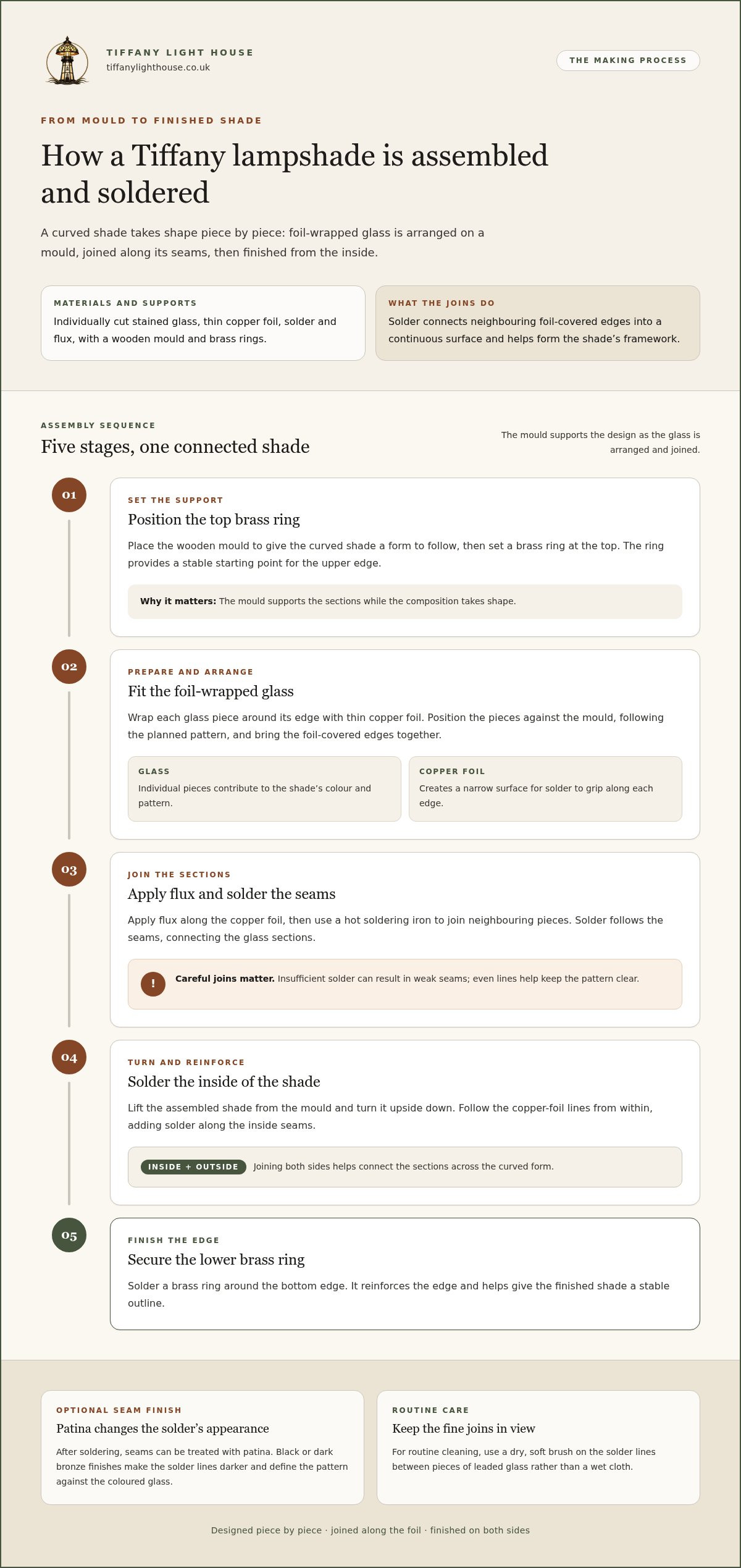
Tiffany lampshades are made from individually cut stained glass, thin copper foil, solder and flux. Makers also use a wooden mould and brass rings to support the shade during assembly and stabilise its finished shape.
Assembly begins with a mould that gives the curved shade a form to follow. A brass ring is placed at the top. The maker positions each foil-wrapped glass piece against the mould, following the pattern. The edges must meet so solder can join them into a continuous surface. The mould supports the sections as the design takes shape, helping keep the composition in place.
Before fitting, each piece is wrapped around its edge with thin copper foil. The foil gives solder a narrow surface to grip, allowing small, shaped sections to be joined. The maker applies flux along the foil and uses a hot soldering iron to join neighbouring pieces. Solder runs along the seams, connecting the glass and forming the shade’s framework. The joins need care: weak seams can result from insufficient solder, while even lines keep the pattern clear.
- Position the top ring. It gives the upper edge a stable starting point on the mould.
- Arrange the wrapped glass. Set the foil-covered edges together in the planned pattern.
- Apply flux and solder. Use the hot iron to join the copper-foil seams.
- Turn and finish the shade. Lift it from the mould, turn it upside down and solder the inside along the foil.
- Secure the lower edge. Solder a brass ring around the bottom to help stabilise the shade.
Soldering the inside is an essential part of assembly, not a decorative afterthought. Once the shade is lifted and turned, the maker follows the copper-foil lines from within. Joining both sides helps connect the sections across the curved form. A bottom brass ring reinforces the edge and gives the finished shade a stable outline.
After soldering, the seams can be treated with patina. Tiffany shades commonly use black or dark bronze finishes, which change the appearance of the silver solder lines. Darker seams define the pattern against the coloured glass. For routine cleaning, a dry, soft brush is recommended for the solder lines between pieces of leaded glass, rather than a wet cloth. This keeps the fine joins in view.
The brass ring is placed on the mould before the foil-wrapped glass pieces are positioned. Flux and a hot soldering iron join the pieces. This sequence keeps the ring and mould in place as the glass sections are arranged and connected. Assembly is a step-by-step process, rather than a series of separate joins made after the shade has been formed.
Once the glass pieces are assembled, the shade is lifted from the mould and turned upside down. The maker then solders along the copper foil on the inside. This follows the joining work on the mould, adding solder along the foil from within the inverted shade.
Traditional and contemporary shade designs
Traditional Tiffany designs use coloured glass, planned patterns and hand-joined construction. Contemporary reproductions can use the same methods, though each shade’s character depends on its design and the glass selected.
Traditional Shade Designs
Louis Comfort Tiffany’s first lamps were described as Favrile, a term meaning handcrafted. His Favrile glass embedded colour and texture directly into the glass, rather than relying only on a surface finish. This gave designers a rich palette for arranging individual pieces into shaded patterns. The Metropolitan Museum of Art notes that the selected sections of glass made each shade unique, even when makers followed the same pattern.
Tiffany Studios displayed custom ceiling light fixtures at the World’s Columbian Exposition in Chicago in 1893. Its studios introduced leaded-glass lampshades in 1898. These designs drew on detailed compositions, with glass chosen for variations in colour and density. Look closely at how the colours move across the shade, and how the pattern responds to its curved form.
Traditional designs changed as tastes shifted. Tiffany Studios stopped producing its more colourful and extravagant designs by about 1910, as Art Deco and modern aesthetics gained influence. The company continued producing lamp designs until the late 1920s. This history helps explain why traditional shades can range from ornate floral imagery to more restrained geometric patterns.
Craftsmanship and Reproduction Differences
How does Tiffany lampshade craftsmanship compare with modern reproductions? Traditional and contemporary handcrafted shades can share the copper-foil method, which wraps each glass edge in thin copper ribbon before soldering. This allows more intricate designs than thick lead came. To compare examples, look at the individual pieces, the pattern’s complexity and how the solder lines follow each join.
The word “reproduction” alone doesn’t explain how a shade was made. Traditional Tiffany lighting and contemporary handcrafted styles can both use individually cut glass and hand-soldered seams. Compare the materials and assembly method: glass selection shapes colour variation, while copper foil supports detailed patterns. Finished shades can also differ in design, glass texture and the distribution of colour.
Compare a geometric shade with a floral design. Repeated shapes create a regular rhythm, while a floral pattern may use varied pieces to suggest petals and leaves. In either case, check how the glass sections fit together and whether the solder lines trace the design clearly. These details show how pattern and construction relate, without assuming age alone determines quality.
Contemporary makers continue to use traditional techniques, adapting patterns and glass choices for today’s interiors. A close comparison focuses on visible craft: the arrangement of pieces, contrast between colours and finish of the joins. These features show how a shade’s design carries from drawing to finished glasswork.
Clara Driscoll and the Tiffany Girls
Clara Driscoll’s name is closely associated with design work at Tiffany Studios. The women who worked in its glass department became known as the Tiffany Girls. Their contribution reached beyond assembling shades. It included shaping designs and working with coloured glass, helping turn artistic ideas into objects made from many carefully considered pieces.
Driscoll is particularly associated with floral and naturalistic lamp designs, including Dragonfly and Wisteria shades. Their character depends on more than a recognisable motif. A dragonfly’s wings, for example, need distinct glass sections, while surrounding foliage brings movement to the design. The maker must translate those forms into pieces that can be cut, arranged and joined across a curved surface.
That translation calls for practical judgement as well as artistic vision. A drawing may suggest a flower or insect, but the glassworker must decide where each piece begins and ends. Shape, colour and texture all influence how the image looks when light passes through it. In a detailed motif such as a dragonfly, the sections must distinguish the wings and body while preserving the rhythm of the surrounding pattern.
The Tiffany Girls’ work also shows how individual skill fits into a wider workshop process. A designer’s pattern guides the arrangement, while glass selectors and cutters prepare sections for assembly. Glaziers then bring the pieces together. Each role affects the finished appearance: a change in glass colour can shift a flower’s balance, while careful placement can give a wing more depth.
Driscoll’s story helps explain who shaped the designs, not just how the finished shades were made. The name “Tiffany” is often associated with Louis Comfort Tiffany, yet the women’s work at Tiffany Studios was part of the creative and practical process. When looking at a Dragonfly shade, notice how the motif is divided across the glass and how the surrounding leaves frame the central image.
For collectors, the pattern offers clues to the thinking behind the craft. A Wisteria design relies on the relationship between hanging flowers and foliage. Its effect comes from the placement of each coloured section, not just the outline. The joins and any dark patina follow that composition. Together, these choices make the shade both a picture and a constructed object.
Remembering Clara Driscoll and the Tiffany Girls draws attention to the people and decisions behind Tiffany Studios’ lamps. Their legacy can be seen in designs that reward close observation: the flow of a stem, the edge of a petal or the colour chosen for a wing. These details bring the story of design and glasswork into view.
Hand assembly of Tiffany-style shades
Hand assembly turns a drawn pattern into a curved stained-glass shade through a series of skilled decisions. Tiffany light shade craftsmanship is visible in how the glass, pattern and joins work together.
Hand Assembly Process
A design can contain hundreds, sometimes thousands, of numbered glass pieces. Numbering helps makers match each cut section to its place, especially when neighbouring shapes look alike. As you examine a shade, follow one motif across the surface. Notice how its pieces change direction around the curve and how neighbouring colours define its outline.
Fit matters as much as sequence. A section that does not meet its neighbours cleanly can interrupt the image or create an uneven seam. Groziers, or soft-tipped pliers, help refine edges so the glass fits its intended place. This close work connects the flat pattern to the finished form. The shade’s visual rhythm depends on each section’s relationship to the next.
Shade-Making Process
The process starts with a watercolour sketch and a wooden mould. Hand-coloured paper patterns guide numbered metal templates, which help makers prepare the glass sections. Glass is selected for colour and density, then scored and broken to match each template. The choice of glass affects how a petal, leaf or geometric border looks when light passes through it.
How long does it take to make a handcrafted Tiffany-style lampshade? The time depends on the design, the number and shape of its sections, and the care needed to select, cut, refine and fit them. A detailed pattern involves more individual handling than a simpler arrangement.
What safety standards apply to Tiffany-style lamps and shades in the UK? The relevant consideration is the electrical safety of the complete lamp, not the glass shade alone. The shade-making method describes the glasswork, but does not establish the safety of the electrical components.
Once the pieces are ready, their edges are wrapped in thin copper foil. Makers arrange them on the mould, then use flux and a hot soldering iron to join the foil seams. The shade is lifted, turned and soldered along the inside before a brass ring is added to its lower edge. This order supports the curved structure as the pattern comes together.
A close look at Tiffany light shade craftsmanship reveals a balance between repeatable steps and individual choices. Numbered templates organise the design; selected glass brings variation. For collectors, tracing one colour through the pattern is a useful way to see how those decisions shape the finished shade.
How are Tiffany-style lampshades made?
A Tiffany-style lampshade develops through connected stages, from watercolour sketch to finished glasswork. The design guides the work, while each glass choice gives the shade its character.
Production begins with a designer preparing a watercolour sketch for approval. The image establishes the composition before it becomes a glass pattern. A wooden mould is then made to support the shade’s intended shape. It gives the design a physical form, helping makers see how the motifs will sit across a curved surface.
Next, hand-coloured paper patterns are used to create numbered metal templates. Each template represents a glass section and its place in the larger design. Tiffany lamp designs can contain hundreds, sometimes thousands, of pieces. Numbering keeps the pattern organised, especially when adjacent sections have similar shapes or colours.
Glass selection is a craft in its own right. At workshops like Tiffany Light House, selectors work from thousands of sheets, choosing sections for colour and density. Those qualities influence how a motif appears when light passes through it. The Metropolitan Museum of Art explains that individual glass selections made each shade unique, even when makers followed a shared pattern. A repeated design could therefore retain its structure without making every finished shade identical.
The selected glass is scored and broken to match its templates. Makers refine the edges with groziers, or soft-tipped pliers, so each section fits its neighbours. This is where a pattern’s precision meets the natural variation of glass. A petal, leaf or geometric border depends on both its outline and the colour within it.
Making a shade can involve several kinds of expertise. Roughly a dozen craftspeople could contribute, including designers, glass selectors, cutters and glaziers. Each role serves a different need: the designer plans the image, selectors find suitable glass, cutters shape the sections and glaziers assemble them. These hand-offs matter because an adjustment at one stage affects the next.
When examining a finished shade, look beyond its overall motif. Notice whether the glass colours create a clear visual flow and how small sections support the larger pattern. These details reveal decisions made during sketching, selection and cutting.
Traditional Tiffany lights continue to use methods associated with the original leaded lamps. The copper-foil technique allows more intricate designs than thick lead came, because thin copper ribbon wraps the edges of cut glass. Tiffany-style lampshades are made by joining these coloured glass pieces with solder. From the first sketch to the assembled shade, exemplary Tiffany light shade craftsmanship balances a planned design with the distinctive colour and texture of individual pieces.
Tiffany Light House: Tiffany Ceiling Lights
Tiffany Light House offers Tiffany Ceiling Lights for rooms where coloured glass can bring warmth overhead. Each shade is made by hand from individually cut and arranged glass, using the traditional copper-foil technique. The same careful glasswork features across Tiffany Floor Lamps, Tiffany Table Lamps and Tiffany Wall Lights, giving you different ways to introduce patterned light at home.
If you’re choosing a fitting, consider where you want the colour and detail to sit in the room. A ceiling light draws the eye above, whilst a table lamp or wall light creates a more local glow. UK delivery is free, and returns are free within 30 days.
Explore the Tiffany lighting range or contact Tiffany Light House.
Choose the glow that feels right for your home
Let Tiffany light shade craftsmanship guide what you look for next: not just a pattern you admire, but how coloured glass might shape a room’s atmosphere. Consider where you’d most enjoy its presence. A ceiling light draws the eye overhead, while a floor or table lamp brings a gentle pool of colour closer to where you sit.
Tiffany Light House offers Tiffany Ceiling Lights, Tiffany Floor Lamps and Tiffany Table Lamps. Explore the designs at your own pace and notice which colours and patterns feel at home in your space. The right choice is personal, shaped by the rooms you live in and the details you love.
Contact Tiffany Light House today to continue exploring. A little colour can make a familiar room feel warmly your own.
Frequently Asked Questions
What affects the quality and durability of a Tiffany glass lampshade?
Quality and durability depend on how accurately the glass sections fit, how evenly the seams are joined and how the shade’s edges are supported. A design with many small pieces calls for especially careful fitting. For upkeep, clean the solder lines with a dry, soft brush rather than a wet cloth. This simple care keeps the joins and coloured glass clear to view.
How can you identify an authentic Tiffany Studios lampshade?
Assess the leading, patina, pattern, bronze-base casting, and type and quality of the glass. These features help specialists judge whether a Tiffany Studios lamp is original.


