

A wall light can bring colour to a room even when it’s switched off. Tiffany wall lights feature stained-glass shades made from hand-cut pieces joined using the traditional copper-foil technique. The result is a gentle interplay of glass, pattern and light.
Choosing one is as much about the room as the design. You may be drawn to botanical motifs, geometric lines or a particular colour mix, while the shape and finish help the fitting sit naturally in your home.
This guide explores stained-glass designs and influences, along with colours, finishes and bulb options. It also explains what to compare when considering price and availability, so you can picture how each style might look and feel in your space.
Key Takeaways
- Compare stained-glass motifs and shade shapes to find a design that suits your room’s character and the light you want to create.
- Prices and availability vary between designs, so compare current UK listings before choosing.
- Look at the glass colours alongside the fitting’s finish to see how they’ll sit with your existing décor.
- Clear LED bulbs can help bring out the glass’s colour and sparkle; consider the bulb type when choosing a fitting.
- Recognise the geometric and decorative influences associated with the 1920s and 1930s when exploring different styles.
Stained-glass Tiffany wall-light designs
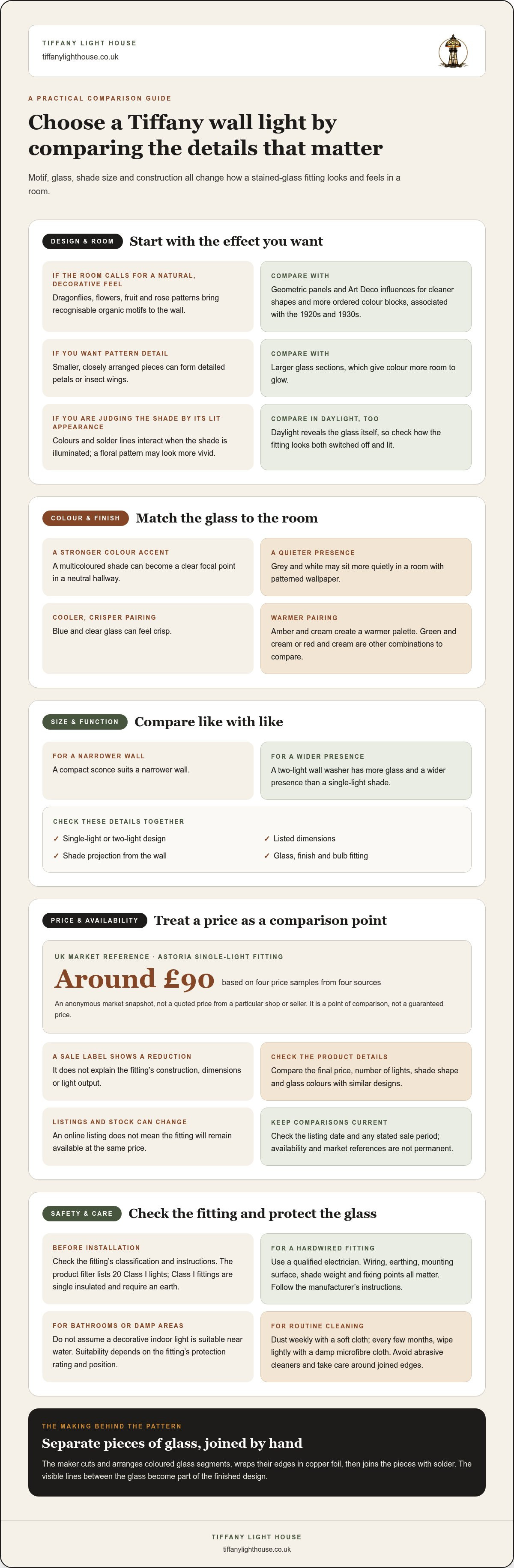
From botanical motifs to crisp geometry, Tiffany wall lights bring pattern to a vertical surface. Common designs include dragonflies, flowers, fruit and abstract shapes. A dragonfly motif feels natural and decorative. Geometric panels create a more ordered effect, while rose patterns offer a floral focal point. The glass colours and outline of each shade shape its overall impression.
Each shade is made from separate pieces of coloured glass. With the copper-foil technique, the maker cuts and arranges glass segments, wraps their edges in copper foil, then joins the pieces with solder. This method allows for curved outlines and detailed patterns. The finished shade has visible lines between the glass, which become part of its design.
Construction affects both appearance and light. Smaller, closely arranged pieces can form detailed petals or insect wings, while larger sections give colour more room to glow. Look at the shade switched off, too. Daylight reveals the glass itself, while an illuminated shade shows how colours and solder lines interact. A floral pattern, for example, may look delicate in daylight and more vivid when lit.
Do UK electrical safety rules apply to Tiffany wall lights? Yes, electrical safety matters for wall fittings and their wiring. The product filter lists 20 Class I lights, which are single insulated and require an earth. Check the fitting’s classification and instructions against the intended installation.
How do you install a Tiffany wall light safely in the UK? For a hardwired fitting, use a qualified electrician and follow the manufacturer’s instructions. The electrician can assess the existing wiring, earthing and mounting surface. Don’t handle wiring yourself unless you’re competent to do so. A glass shade also needs secure support, so its weight and fixing points matter.
Are Tiffany wall lights suitable for bathrooms or other damp areas? Suitability depends on the fitting’s protection rating and its position in the room. Don’t assume a decorative indoor light is suitable near water. Use only a fitting whose instructions specify suitability for that location.
How should Tiffany wall lights be cleaned and maintained? Dust them weekly with a soft cloth. Every few months, wipe lightly with a damp microfibre cloth. Avoid abrasive cleaners, which can affect the solder and glass. Keep the cloth only slightly damp, and take care around the shade’s joined edges. These simple steps help preserve the colour and surface detail.
Examples show how motif and finish shape the choice.
Wall-light product prices and availability
Prices for Tiffany wall lights vary with the design, size and construction. A single-light shade and a two-light wall washer serve different purposes. The latter has more glass and a wider presence, while a compact sconce suits a narrower wall. Compare the shape and materials alongside the price, rather than treating every stained-glass fitting as equivalent.
For a UK market reference, the typical market range for an Astoria single-light fitting is around £90. This figure is based on four price samples from four sources, collected on 24 October 2026, and is valid until 23 November 2026. It’s an anonymous market snapshot, not a quoted price from a particular shop or seller. Use it as a point of comparison, not a guaranteed price.
Discount labels need a little care. A sale price shows a reduction against a displayed reference price, but the label alone doesn’t explain the fitting’s construction, dimensions or light output. Compare the final price with the product details. For example, check whether the listing describes one lamp or two, then compare its shade shape and glass colours with similar designs.
Availability can change as stock and product listings change. A fitting appearing online doesn’t mean it will remain available at the same price. Note the listing date and any stated sale period when comparing options. The market snapshot above has a defined validity period, so it shouldn’t be treated as a permanent price guide. A fresh comparison helps keep decisions grounded in current listings.
Before choosing, make a short comparison of the details that affect value:
- Compare single-light fittings with two-light designs separately.
- Read the listed dimensions and check the shade’s projection from the wall.
- Look for clear information about the glass, finish and bulb fitting.
- Distinguish a stated sale price from a typical market reference.
These checks help explain why two similarly coloured shades may have different prices. A broad wall washer, for instance, creates a different visual scale from a small sconce. The number of lights and amount of glass also affect the overall design. Set a budget around the style and function you need, then compare Tiffany wall lights using like-for-like details.
Once you’ve narrowed your preferences, explore the Tiffany wall-light designs that suit your space. A considered comparison of shade size, pattern and fitting style makes the final choice clearer.
Colour and finish options
Colour sets the mood before a wall light is switched on. Tiffany-style shades use combinations such as blue and clear, green and cream, or red and cream glass. Each pairing changes the balance between a strong colour accent and a softer, lighter appearance. Blue and clear glass can feel crisp, while amber and cream create a warmer palette.
Consider the room’s existing colours first. In a neutral hallway, a multicoloured shade can become a clear focal point. In a room with patterned wallpaper, a simpler combination of grey and white may sit more quietly. Compare the glass in daylight and under artificial light. Its appearance shifts with the surrounding light and nearby colours.
Decorative motifs affect how colour is arranged. Dragonfly designs often bring contrasting glass pieces together in a recognisable central image. Art Deco patterns favour cleaner shapes and more ordered colour blocks. Floral designs, including rose motifs, create a softer, more organic effect. Choose a motif that complements the room’s character rather than matching every colour exactly.
Crystal details add another visual element. Some designs combine coloured glass with clear crystal, creating contrast around the shade. Beige glass with crystal detail feels restrained, while blue glass and clear crystal make a cooler pairing. Crystal can catch the light differently from coloured sections, so consider whether you want a gentle accent or a more noticeable glint.
Finish can also describe the overall treatment of the fitting. A wall washer directs light upwards or across a wall, making its shape and glass palette part of the room’s atmosphere. A sconce-style fitting projects from the wall in a more compact form. Compare these silhouettes with the available wall space. A broad shade may suit an open surface, while a smaller outline can work beside a doorway.
Use these steps to narrow the palette and finish:
- Choose a dominant glass colour that already appears in the room.
- Decide whether clear sections or crystal details should add contrast.
- Match the motif to the setting, such as geometric Art Deco or floral glass.
- Compare the wall washer and sconce profiles against nearby furniture and fittings.
For example, blue and clear glass can echo a cool-toned scheme, while green and cream offer a gentler contrast against natural hues. A multicoloured dragonfly shade suits a room where the wall light can stand alone. These comparisons help you choose a glass palette and decorative finish that feel considered, not crowded.
LED compatibility and dimmable bulbs
A clear LED bulb can help reveal the sparkle and colour of a stained-glass shade. Light passes through the coloured sections, making their pattern part of the room’s evening atmosphere. Clear glass within a design can appear especially bright, while darker pieces create a more subdued effect. The bulb still needs to suit the fitting.
Start with the fitting’s product details. Look for its bulb type, maximum permitted wattage and any stated LED compatibility. These details determine which bulb will physically fit and work within the design’s limits. A bulb that looks suitable may have the wrong base or be too large for the shade. Compare its dimensions with the space around the lamp holder.
Colour appearance depends on both the glass and the bulb’s light. A clear LED can bring out contrasts in a multicoloured dragonfly motif. In a cream-and-amber shade, the same clear bulb can make the warm glass tones more visible. If colour is central to your choice, consider how the bulb illuminates each glass section rather than judging the shade by daylight alone.
Dimming involves two compatible parts: the bulb and the dimmer control. A dimmable LED bulb needs a dimmer that supports it. If either part isn’t suitable, the light may not dim as intended. Check the bulb packaging and the dimmer’s product information together. Don’t assume a standard LED bulb will dim simply because a dimmer switch is already fitted.
Use this practical sequence before buying a replacement bulb:
- Read the wall fitting’s instructions for bulb type and permitted wattage.
- Choose a clear LED bulb that matches the stated fitting requirements.
- Check its shape and size against the shade and lamp holder.
- For dimming, match a dimmable bulb with a compatible dimmer control.
For a two-light wall washer, check both lamp holders. The same bulb requirements may apply to each, but the fitting’s instructions are the guide. Matching bulbs can help the two sides of a shade look balanced. A single-light sconce has one bulb to consider, so its appearance depends on that bulb and the surrounding glass.
When replacing a bulb, switch off the fitting and let the old bulb cool before handling it. Follow the manufacturer’s instructions for access to the lamp holder. Avoid forcing a bulb into place. A correct fit, clear LED glass and a compatible dimming set-up help preserve the shade’s colour and intended quality of light.
Wall-light product prices and availability
Prices for Tiffany wall lights vary with the design, size and construction. A single-light shade and a two-light wall washer serve different purposes. The latter has more glass and a wider presence, while a compact sconce suits a narrower wall. Compare shape and materials alongside price, rather than treating every stained-glass fitting as equivalent.
For a UK market reference, the typical market range for an Astoria single-light fitting is around £90. This figure is based on four price samples from four sources, collected on 24 October 2026, and is valid until 23 November 2026. It’s an anonymous market snapshot, not a quoted price from a particular shop or seller. Use it as a comparison point, not a guaranteed price.
Discount labels need a little care. A sale price shows a reduction against a displayed reference price, but the label alone doesn’t explain the fitting’s construction, dimensions or light output. Compare the final price with the product details. For example, check whether the listing describes one lamp or two, then compare its shade shape and glass colours with similar designs.
Availability can change as stock and product listings change. A fitting appearing online doesn’t mean it will remain available at the same price. Note the listing date and any stated sale period when comparing options. The market snapshot above has a defined validity period, so it shouldn’t be treated as a permanent price guide. A fresh comparison keeps decisions grounded in current Tiffany wall light listings.
Before choosing, compare the details that affect value:
- Compare single-light fittings with two-light designs separately.
- Read the listed dimensions and check the shade’s projection from the wall.
- Look for clear information about the glass, finish and bulb fitting.
- Distinguish a stated sale price from a typical market reference.
These checks help explain why two similarly coloured shades may have different prices. A broad wall washer creates a different visual scale from a small sconce. The number of lights and amount of glass also shape the design. Set a budget around the style and function you need, then compare similar Tiffany wall lights using like-for-like details.
Once you’ve narrowed your preferences, explore the Tiffany wall-light designs that suit your space. Comparing shade size, pattern and fitting style can make the final choice clearer.
Tiffany Light House: Tiffany Ceiling Lights
Tiffany Light House offers Tiffany wall lights alongside ceiling lights, floor lamps and table lamps. If you’re choosing a stained-glass fitting for a particular room, its collection gives you different lighting styles to compare. Each shade is handcrafted from individually cut and arranged glass using the traditional copper-foil technique.
Consider how a wall fitting will work with the room’s other light sources. A matching table lamp can bring the same glasswork closer to a reading chair, whilst a ceiling light creates a focal point overhead. Free UK delivery and free 30-day returns are available, giving you practical details to consider as you browse.
For a closer look at the collection, visit Tiffany Light House.
Let your chosen light shape the room
Before choosing a fitting, picture the wall as part of the room’s wider rhythm. Consider what sits nearby, where you pause in the evening, and whether the light should blend into the setting or become a focal point. Tiffany wall lights can add a distinctive note to a quiet corner, while careful placement helps the shade feel connected to the room.
Think about how Tiffany wall lights might work alongside other stained-glass pieces. Tiffany Light House offers Tiffany Ceiling Lights, Tiffany Floor Lamps and Tiffany Table Lamps, giving you different forms to consider across your home. Let the room’s needs guide your choice, from a gentle reading nook to a more decorative hallway.
Choose the design that feels at home in your surroundings, then take the next step at your own pace. Contact Tiffany Light House to explore the collection. Tiffany wall lights can bring a personal touch to an everyday space, and your favourite design is the one that feels right at home.
Frequently Asked Questions
What are Tiffany wall lights made from, and how are they constructed?
The shade is handcrafted from individually cut and arranged glass using the traditional copper-foil technique, and set within a metal frame. This construction brings together coloured glass and a visible framework, so you can appreciate the pattern with the light on or off. Check the fitting’s product details for its particular shape and materials.
How much do Tiffany wall lights cost in the UK?
Prices depend on the design and fitting. As a market reference, an Astoria single-light Tiffany wall light had a typical price of around £90. That estimate came from four price samples collected on 24 October 2026, and was valid until 23 November 2026. It’s an anonymous market snapshot, not a price from Tiffany Light House. Treat it as a comparison point, not a current quote.
Where can you buy Tiffany wall lights in the UK?
You can buy them online from Tiffany Light House, which sells wall lights across the UK. Browse the wall-light category to compare available designs, then consider how the fitting will work in your room. The shop advertises free UK delivery and free next-day delivery. Free 30-day returns are also offered, giving you time to consider your purchase at home.
What bulb type, wattage and fittings do Tiffany wall lights use?
The fittings use E27 bulbs, which aren’t included, and are dimmable. Check the individual product details for the permitted wattage and fitting specifications before choosing a replacement bulb. Don’t assume another lamp’s wattage applies to a wall fitting. If you plan to use a dimmer, choose a dimmable E27 bulb and make sure it’s compatible with the dimmer control.
How do Tiffany wall lights compare with stained-glass and reproduction lights?
Tiffany wall lights are stained-glass fittings made from hand-cut pieces joined with copper foil, leaving visible lines between the glass and allowing detailed patterns. Designs include floral and geometric motifs, including styles associated with the 1920s and 1930s.
What should you check before buying a vintage or second-hand Tiffany wall light?
Check the glass, shade shape, dimensions, finish, bulb fitting and product instructions, including the fitting’s electrical classification. For a hardwired light, have a qualified electrician assess the wiring, earthing and mounting surface, and ensure the glass shade is securely supported.


