

Tiffany wall lights deserve a place in the room plan, not just the hallway. Tiffany-style lighting brings colour and a gentle glow to living rooms, bedrooms and entrance spaces. Table lamps suit bedside tables and reading corners, while ceiling lights bring stained-glass detail overhead.
The appeal is easy to understand: coloured glass adds character, and its glow feels softer and more intimate than a plain fitting. The best choice depends on the room, the available space and whether you want a subtle accent or a decorative focal point.
Find practical ideas here for choosing stained-glass colours, positioning bedside lamps and using wall lights around the home. We’ll also explore how ceiling, table, floor and wall lights can each contribute to a warm, considered interior.
Key Takeaways
- Choose stained-glass colours that echo your room’s existing palette, then decide whether the shade should blend in or become a focal point.
- Match the fitting to the room’s purpose: ceiling lights provide overhead character, while floor and table lamps bring light closer to where you need it.
- For a bedside lamp, consider the space on your table and the kind of light you want for reading or winding down.
- Use wall lights to add colour and a softer glow where floor or table space is limited, and consider how their design relates to nearby furnishings.
Stained-glass designs and colour palettes
Tiffany-style lighting includes table lamps, floor lamps, ceiling lights and wall lights. Each shade is made from individually cut and arranged glass, joined using the traditional copper-foil technique.
Stained-glass designs
Stained-glass designs feature floral forms, dragonflies, geometric borders or landscape-like scenes. Start with the dominant colours, then notice how pale pieces balance stronger reds, greens and blues. A Dragonfly-style floor lamp can bring a nature-inspired motif to a reading corner. An Art Deco ceiling light can echo crisp lines in a sitting room.
Glass materials and techniques
Louis Comfort Tiffany began the techniques used for these designs at Tiffany Studios in 1879. The original New York studio closed in the 1930s, while replica designs span the 1900s through to the 1930s. In a hand-worked shade, individually cut glass pieces are arranged to form a pattern and held together with copper foil. Glass texture and opacity also shape how the colours appear when the lamp is lit.
The Tiffany name is associated with a craft tradition, rather than a single pattern. Designs range from nature-inspired dragonflies to the clean geometry of Art Deco. To choose a palette, start with the room’s existing colours: blue and green glass can complement cooler tones, while amber and red add warmth. Then consider the shade’s pattern and scale. A detailed motif can draw the eye on a table lamp, while a simpler arrangement may feel calmer across a larger ceiling shade. Look at the lamp both unlit and illuminated. By day, the glass adds colour to the room; at night, its appearance changes as light passes through it.
Where can I use Tiffany lights?
A Tiffany ceiling light brings stained-glass colour into a living room, dining area or hallway. Choose a flush fitting when a lower ceiling calls for a close-to-ceiling shape. A pendant suits a space where the shade can hang as a visible centrepiece. Art Deco patterns add crisp geometry, while floral designs soften rooms with traditional furnishings. Match the shade’s scale to the room and nearby furniture so the pattern feels considered, not crowded.
Keep the glass clean with a gentle routine. Dust the shade weekly to remove loose particles, then wipe it with a damp cloth twice per year. Avoid abrasive cleaners and products containing solvents or chemicals, which can damage the glass surface. Switch the light off before cleaning and let the shade dry before using it again. These simple steps help preserve the coloured panes and their clear pattern.
Plan installation around the fitting and the existing ceiling or wall point. Ceiling pendants, flush fittings and wall lights typically require professional installation to meet UK wiring standards. Consider the light’s position, the ceiling height and how the fitting will sit alongside other room lighting. A flush design feels visually contained, while a pendant makes more of its stained-glass shade.
Prices vary by design and fitting, so compare like with like. Consider the shade’s dimensions, pattern and construction, and whether the fitting is a pendant or flush light. A compact, simple shade and a larger, more intricate design are not direct comparisons. Focus on how each option suits the room, rather than choosing on appearance alone.
Before settling on a ceiling light, view its colours against your walls and furnishings. A blue-and-cream pattern can pick up cool room tones; amber glass can warm a neutral dining space. For more ideas, browse stained-glass lighting designs and consider which palette feels at home in your room.
Tiffany bedside lamps
A Tiffany lamp is a decorative light with a coloured glass shade assembled from individual pieces using copper foil. Table lamps, floor lamps and ceiling fittings bring this detail to different parts of the home.
For a bedside table, consider the shade’s footprint and whether its light suits reading or winding down. The Tiffany Bedside Lamps collection includes 44 products, with compact designs such as mini table lamps for smaller surfaces.
Floral table lamps
Floral Tiffany table lamps use petals, leaves and blooms to create a motif that suits patterned furnishings or plain walls. Look at the background glass as well as the flowers: a pale ground keeps the pattern airy, while richer colours make it more prominent. Place the lamp where its shade is visible from the bed.
Original and Tiffany-style lamps
Original Tiffany lamps were made by Tiffany Studios; Tiffany-style lamps are later designs inspired by this decorative tradition. The distinction is useful when choosing: consider whether you’re seeking a historical original or a contemporary interpretation for everyday use. Art Nouveau and dragonfly-inspired patterns offer familiar references without being the same as an original studio lamp.
Stained-glass and leaded-glass lighting
Stained-glass lighting describes coloured glass arranged into a design, while leaded glass describes pieces joined by lead came. Tiffany-style designs are distinguished by their copper-foil construction and detailed, often curved motifs. When comparing a Tiffany table lamp with other stained or leaded-glass lights, look at the joining technique and pattern, not just the colour.
For a table lamp, clear bulbs are recommended over pearl or opal lamps to show the glass colours. Some Tiffany fixtures work with LED bulbs, and compatible dimmer switches can help adjust the room’s ambience. A floor lamp can add a taller pool of light beside an armchair, while a bedside table lamp keeps illumination close to the bed.
Tiffany wall lights
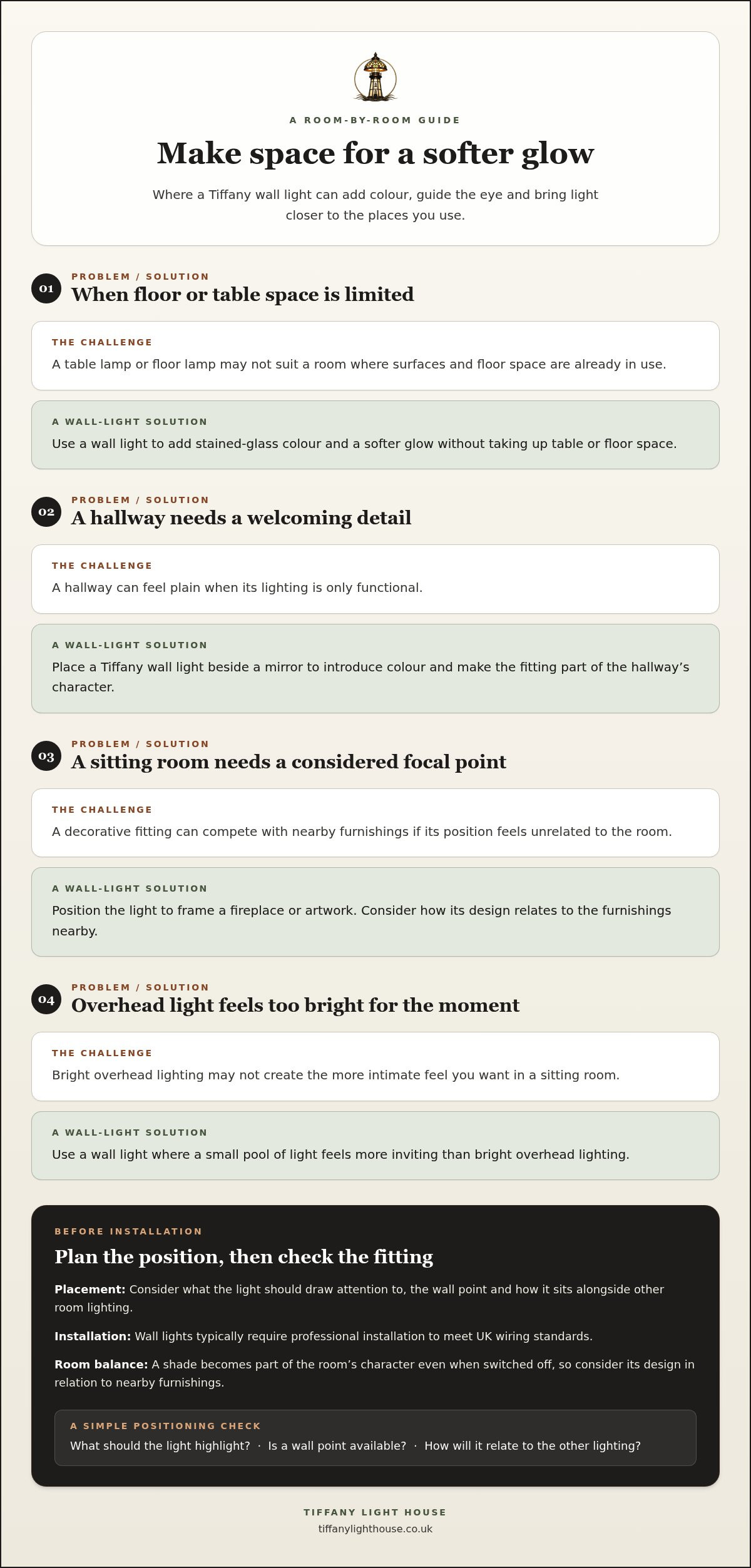
A wall light gives stained glass a visible place without taking up table or floor space. In a hallway, it can add colour beside a mirror; in a sitting room, it can frame a fireplace or artwork. Tiffany wall lights work especially well where a small pool of light feels more inviting than bright overhead lighting. Their shades become part of the room’s character, even when switched off.
Choose a position by considering what the light should draw attention to. A pair beside a bed can create a balanced arrangement, while one uplighter can emphasise a reading nook. Check the shade’s colours against nearby paint, textiles and wood finishes. A cream-and-blue glass design may sit quietly against pale walls; an Art Deco pattern can bring sharper lines to a room with simpler furnishings.
Design names offer useful clues. The Tiffany Alderley Wall Uplighter directs attention upwards, while the NEVADA Tiffany Art Deco uplighter brings a geometric style to the wall. The Tiffany Nevada Wall Light offers another way to introduce stained-glass detail. The Tiffany Wall Lights collection lists 40 products, so compare each shade’s shape and motif with its intended position. A curved shade can soften a narrow hallway; a more structured design may suit a symmetrical living-room layout.
Before choosing, mark the position on the wall and view it from the doorway and main seat. Consider nearby switches, furniture and the direction of the light. Wall lights can complement ceiling fittings, but their placement should feel deliberate rather than crowded. Ceiling pendants, flush fittings and wall lights typically require professional installation to meet UK wiring standards.
For a considered finishing touch, explore Tiffany wall light designs and compare their colours, shapes and decorative details with the room you have in mind.
Tiffany Light House: Tiffany Ceiling Lights
Tiffany Light House offers Tiffany Ceiling Lights for rooms where a stained-glass shade can bring colour overhead. Its range also includes Tiffany Floor Lamps, Tiffany Table Lamps and Tiffany Wall Lights, making it easier to consider different fitting types across a home. Each shade is handmade from individually cut and arranged glass, using the traditional copper-foil technique. This detail may help guide your choice: compare the shade’s colours and pattern with the room, then consider whether a ceiling, table, floor or wall fitting suits its purpose. UK delivery and 30-day returns are free. For a closer look at the available lighting, visit tiffanylighthouse.co.uk.
Choose the light that feels at home
Let the room guide your final choice. Notice where you pause, read or gather, then picture how a coloured glass shade might shape that corner after dusk. A fitting can feel quietly connected to your home when its pattern speaks to your furnishings, rather than competing with them. That is the lasting pleasure of Tiffany-style lighting: a small, personal detail that brings atmosphere as well as illumination.
Tiffany Light House offers Tiffany Ceiling Lights, Tiffany Floor Lamps and Tiffany Table Lamps, with different forms for overhead light, a reading corner or a bedside table. Take a moment to explore the designs and consider which setting you’d most like to soften or brighten. If you’re ready to look at options for your home, visit Tiffany Light House. A thoughtful choice can make an everyday room feel more like your own.
Frequently Asked Questions
How can you tell an authentic Tiffany lamp from a reproduction?
An authentic Tiffany lamp was made by Tiffany Studios, while a reproduction takes inspiration from its designs. Provenance matters: look for a documented ownership history and supporting records, rather than relying on a signature or label alone. Examine the glass, joins and overall workmanship, too. A detailed pattern can be beautifully made without being an original studio piece.
How much do Tiffany-style lamps cost in the UK?
Prices depend on the lamp type, design and size. These are examples for specific designs, not one price for every lamp. Compare the exact model and its listed price before choosing.
How do you choose the right size and style of Tiffany lamp for a room?
Start with the spot the lamp needs to occupy, then compare its measurements with nearby furniture and clear space. For example, the Yellow Dragonfly Style table lamp is 48 cm high, whilst the Dragonfly Style floor lamp is 156 cm high. Consider whether that height suits a bedside surface, reading chair or open corner. Choose a motif that sits comfortably with the room’s existing shapes and colours.
What bulbs and fittings do Tiffany-style lamps use in the UK?
These products are compatible with E27 bulbs, which are not included. Check the fitting details for the specific lamp before buying a replacement bulb, and make sure its base matches. Table and floor lamps differ from ceiling and wall fittings in how they connect to a room. Ceiling pendants, flush fittings and wall lights typically require professional installation to meet UK wiring standards.
Are Tiffany-style lamps safe, energy-efficient and suitable for LED bulbs?
Use a bulb compatible with the lamp’s E27 fitting, and follow the product’s instructions for use. Some Tiffany fixtures can be paired with LED bulbs, which can provide energy-efficient lighting; suitability depends on the specific fixture. Switch a lamp off before cleaning its shade. For a ceiling or wall fitting, professional installation helps meet UK wiring standards and ensures the fitting is connected appropriately.


